
The door market has seen steady growth over the past couple of years, primarily driven by the professional segment, and the forecast for 2026 to 2030 shows continual growth among both professionals and consumers.
While door purchases may not happen as frequently as purchases in other product categories, as the lifespan for a door is about one to several decades, they are an integral part of new construction. Door replacements are also a relatively simple and pragmatic project for homeowners who want to improve the energy efficiency, style, and value of their home.
Additionally, door replacements are driven by desires to improve the accessibility of a home for aging-in-place renovations. With the housing stock in the U.S. increasing, and more homeowners renovating and repairing their current property to fit their evolving needs and lifestyles, the demand for doors is expected to remain steady throughout the forecast period.
What is the State of the Market for Doors in the U.S.?
According to HIRI’s U.S. Home Improvement Products Market Forecast, the market for doors and molding increased at a compound annual growth rate (CAGR) 5.1% from 2020 to 2025 and is expected to grow another .4% in 2026. This product category includes:
- Interior/exterior pre-hung or slab doors
- Garage doors
- Molding and jambs
The consumer market has seen marginal growth over the last year, increasing only slightly from 2020 to 2025. This segment is expected to have similarly small growth this year. In general, the pro market was driving much of the growth during the past few years.
How is the Door Replacement Market Expected to Grow this Year?
In the current forecast period, from 2026 to 2030, the overall home improvement market for doors and molding is projected to continue growing at a rate similar to the preceding period. Unlike the previous years, the consumer market shows stronger growth than the pro market, based on HIRI’s research. However, the value of the professional segment is anticipated to be significantly higher than that of the consumer segment, or about 30%.
Other categories are also relative in the door replacement market, such as hardware (which includes door hardware), and patio doors are grouped with windows and skylights. For more detailed data on market growth for each building product category, including CAGR projections, download HIRI’s U.S. Home Improvement Products Market Forecast.
How Much Does a Door Replacement Usually Cost for Homeowners?
HIRI’s Project Decision Study for mid-to-large-sized exterior projects (meaning projects over $5,000) found that for homeowners who did door and/or window replacements, the average total spending for that category was $14,067 and the median spend was $10,000.
For smaller projects, the cost to replace an exterior door typically ranges from $500 to $2,400, with most projects averaging about $1,500. Meanwhile, interior replacements usually cost homeowners about $300 to $1,300, or an average of approximately $800.The spending for exterior projects, such as door replacements, is heavily skewed toward professional labor over the costs of materials. For example, for large door and window replacements, about 75% of project costs were allocated to professional labor, while materials accounted for about 24% of project spending.
About two-thirds of homeowners are paying for their projects in cash. Another 16% use credit cards, and 13% use a Home Equity Line of Credit (HELOC) or refinancing, which is the highest percentage among exterior projects.
Top Drivers for Door Replacements in the U.S.
Exterior projects, such as door replacements, are primarily maintenance-driven. The average age of the existing housing stock in the United States now hovers around 42 years old, which creates momentum for repair and replacement activities and makes it a growing part of home renovation. As a result, these types of projects help drive door purchases.
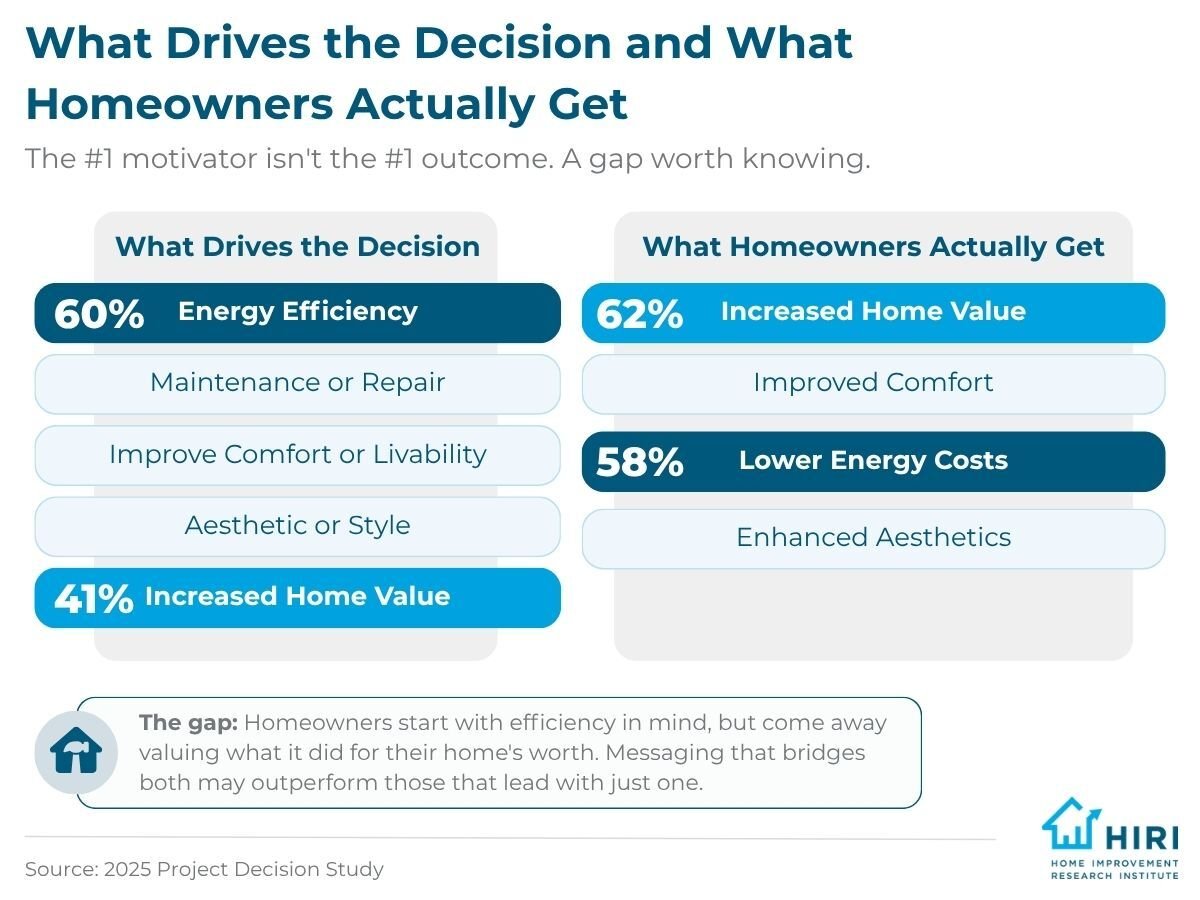
Based on findings from HIRI’s Project Decision Study for exterior envelopes, the main factors driving homeowners to replace their doors (and windows), include:
- Energy efficiency (60%)
- Maintain/repair (48%)
- Improve comfort/livability (47%)
- Improve aesthetics/livability (45%)
- Increase home value (41%)
In terms of the primary benefits received from having completed door replacements, homeowners have listed:
- Increased home value (62%)
- Improved comfort (60%)
- Lower energy costs (58%)
- Enhanced aesthetics (58%)
Both door and window replacements are more often completed alongside other exterior work, such as:
- Siding
- Other exterior work
- Foundation/waterproofing
- Paint/stain
- Porch/balcony
How Does Energy Efficiency Drive Door Replacements?
As more homeowners seek to improve the energy efficiency of their residence and cut down on utility bills, that can be a significant driver for door replacements, which are perceived as a pragmatic and relatively cost-effective way to achieve those goals.HIRI’s Government Incentives & Energy Retrofit study found that more than eight in ten homeowners have adopted energy retrofits in the past five years, and replacing windows and doors with energy-efficient options are one of the leading project categories. About 21% of respondents were planning to install energy-efficient doors or windows in the next 12 months. Along with enhancing energy independence, reducing environmental impact, and improving indoor comfort, homeowners are also motivated by the desire to try new or innovative technologies.
How Does Aging in Place Drive Door Replacements?
Home modifications for aging in place are increasingly common in the U.S., with mobility enhancements, such as installing wider doorways, featuring prominently. This pertains to both entryways into the home, as well as interior renovations and modifications.
HIRI’s 2025 Aging in Place study revealed that about 63% of remodelers reported having installed wider doorways in the past year as part of aging-in-place projects. With the expected demand for these types of projects in the next few years, manufacturers may want to look into how they can meet this demand or expand in this market.

Pro Influence on Doors Replacements
Exterior envelope projects are predominantly led by contractors, with the exception of decks and porches. Based on findings from HIRI’s 2025 Project Decision Study for exterior projects, the project completion method for doors (and windows) was:
- Contractor (82%)
- Both DIY and contractor (11%)
- DIY and/or family and friends (7%)
Of note, this data pertains to households who spent more than $5k on their projects, so these completion patterns reflect larger jobs, where professional labor is more common. The main reasons more people hire professionals to replace doors, rather than doing it themselves, include:
- Work quality (68%)
- Technical expertise (66%)
- Ease and convenience (57%)
- Guaranteed workmanship (57%)
Contractors also purchase about half of the materials for door-related projects, or 49%. Male heads of household (HOH) make about 30% of material purchases and female HOH make about 11% of purchases for these projects. Designers and architects are rarely involved in exterior projects, including door replacements. Only about 11% of homeowners hire a design professional, and interior designers are used by 8% whereas architects are only used for 3%. When they are used, they have a strong influence on project and product decisions.
What Factors Influence Product Choices for Door Projects?
Doors are primarily purchased for home maintenance or repair projects, room remodels, and individual replacements. In general, homeowners make selections based on a variety of practical needs and aesthetic preferences, including:
- Durability/lifespan and maintenance
- Style and design
- Security
- Ease of installation
Brand is also a purchasing consideration for about 31% of exterior door purchased; for interior doors, it is only a consideration for 15% of purchase. Based on data from HIRI's Product Purchase Tracking Study, half of homeowners buying exterior doors purchase front doors. Other types of doors purchased include:
-
Patio doors (35%)
-
Storm doors (29%)
-
Security doors (16%)
The most popular materials for exterior doors include:
-
Steel (46%)
-
Fiberglass (34%)
-
Wood (31%)
Interior doors remain an infrequently purchased product, but there are clear preferences when it comes to the styles that homeowners select for their projects. The most popular styles of interior doors purchased include:
-
Pre-hung (49%)
-
Bi-fold (23%)
-
Hallow core (16%)
-
Solid core (16%)
-
Closet (14%)
What are the Latest Innovations in Residential Door Replacement?
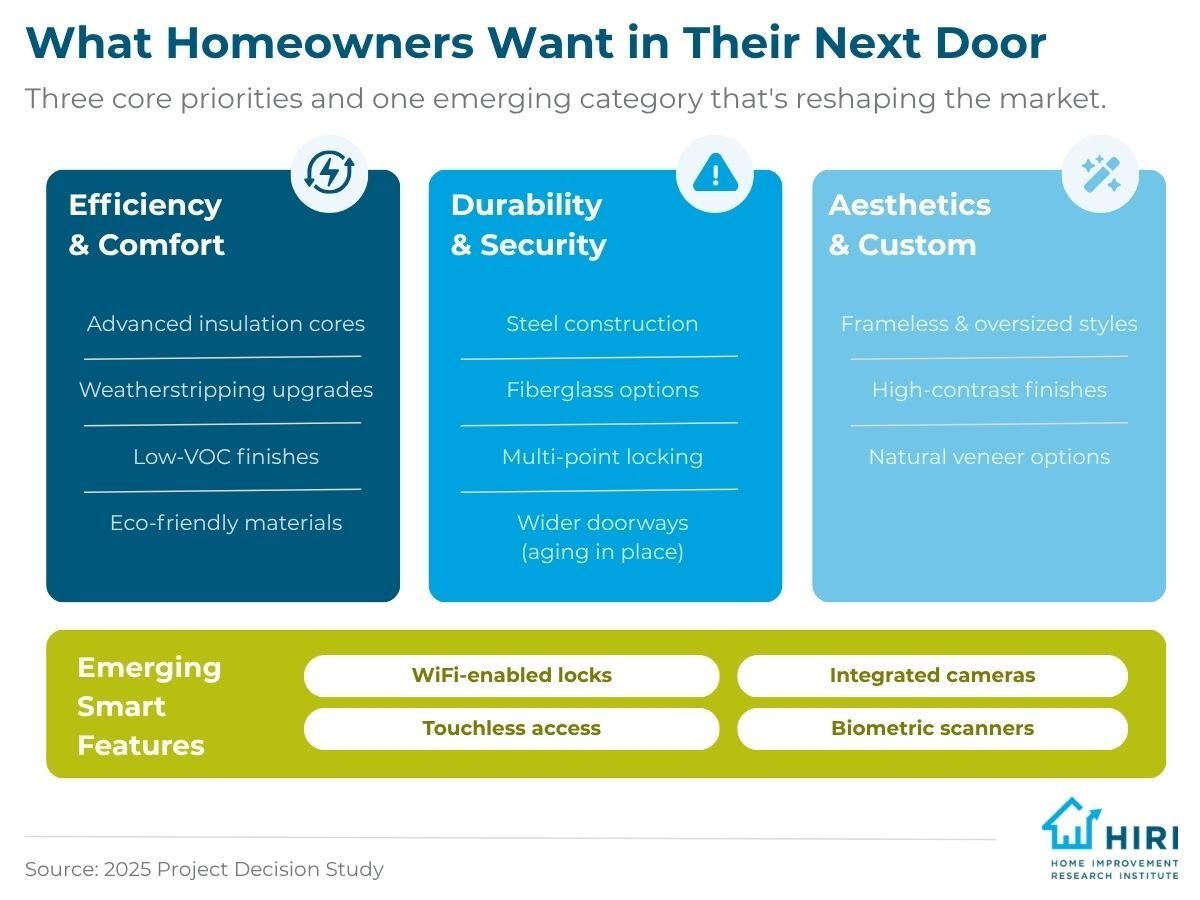
One of the latest innovations in residential door replacement is the integration of smart technology, which is redefining entry door design in 2026. Designed to enhance security and convenience, some of the new features for smart entry systems include:
- WiFi-enabled locks
- Integrated security cameras
- Touchless access
- Biometric scanners
Other recent innovations for residential doors are focused on:
- Sustainability, through eco-friendly or recycled materials, low-VOC finishes, and natural veneer doors
- Energy efficiency, through advanced insulation and durable materials
- New designs, such as frameless and oversized doors and high-contrast finishes
Channels Used for Purchasing Doors
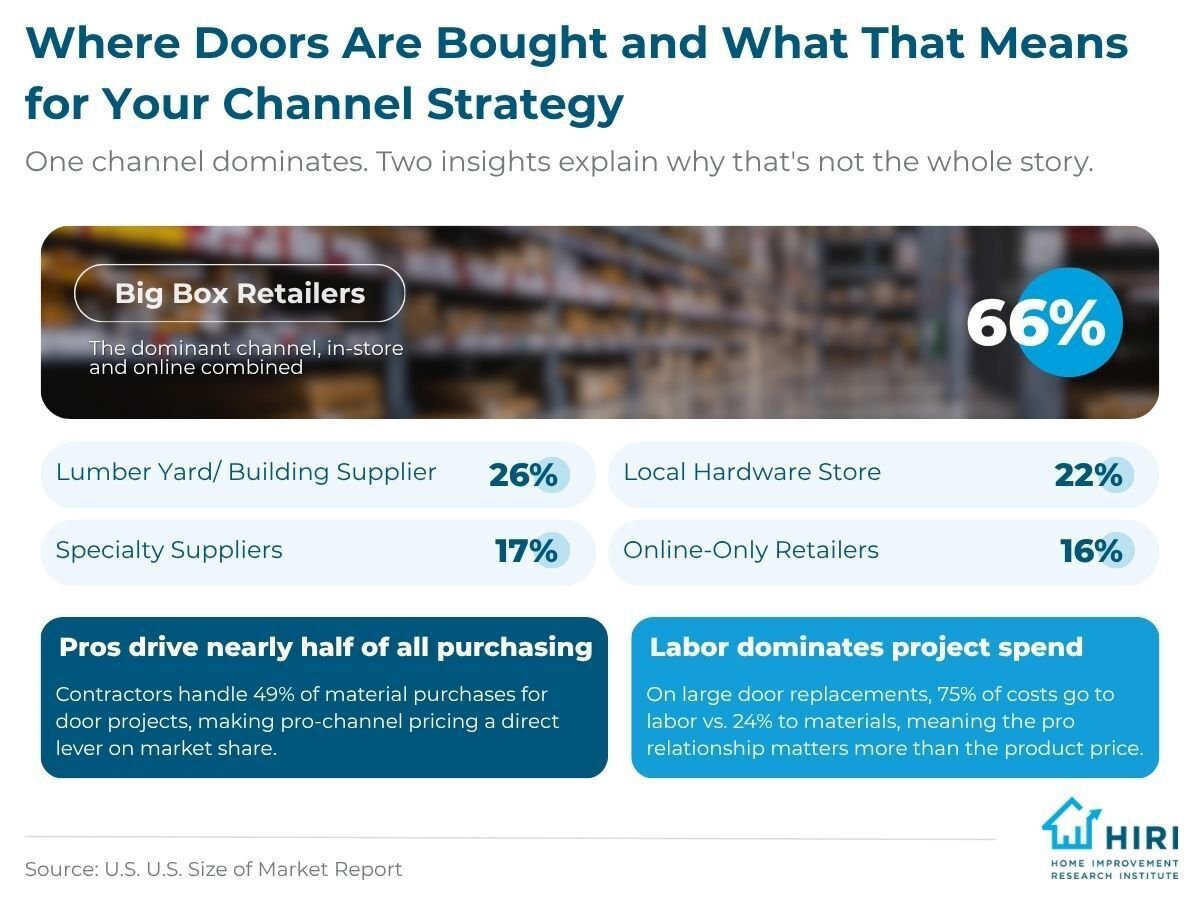
Consistent with data from the past several years, materials and products for exterior envelope projects are primarily purchased at big-box retailers, such as Home Depot, Lowe’s, and Menards. This channel type accounts for about 66% of purchases. Other channels used to buy exterior envelope products, such as doors, include:
- Lumber yard/building material dealers (26%)
- Local hardware store (22%)
- Specialty suppliers (17%)
- Online-only retailers (16%)
- Mass retailer (15%)
- Direct from manufacturer (15%)
- Warehouse clubs (11%)
Materials are most often purchased in store, rather than online. Here are the primary purchase and delivery methods used:
- In-store purchase and pickup (66%)
- In-store with delivery (36%)
- Online and delivery (24%)
- Online and in-store pickup (15%)
When Do Door Replacements Take Place?
Seasonality also comes into play for exterior envelope projects, such as door replacements and installations. On average, the timeline for door projects (as well as window replacements) is about 46.3 weeks. About half of that time is spent in the idea-to-decision phase. It takes another 13.9 weeks, on average, from the time a decision is made for the project to start, and then the work is typically completed in 9.1 weeks.
Regardless of the reason, homeowners report that the idea to take on a door replacement project most often emerges between February and June, with May and June being the most time for making the decision to adopt the project.
Knowing that these projects are coming up in the spring and early summer, manufacturers and suppliers can target their marketing and messaging to connect with homeowners and professionals while they’re in the ideation and planning stages.
Gaining Insights into Future Trends with HIRI Research
From doors, molding, and millwork to other product categories, having the right data and insights can help building product manufacturers and retailers adjust to current trends and upcoming forecasts. HIRI’s reports and studies, which are available to all HIRI members, cover a wide range of relevant topics, from consumer behaviors among DIYers and professionals to key drivers in the home improvement marketplace.

FAQs
Are more people replacing doors themselves or hiring professionals?
For exterior envelope projects, such as entry door replacements, people typically hire a professional, rather than doing the work themselves. Based on findings from the Home Improvement Research Institute’s 2025 Project Decision Study for mid-to-large exterior projects, about 82% of door and window replacements are done by contractors, and another 11% use a combination of professional help and DIY. The main reasons more people hire professionals to replace doors, rather than doing it themselves, is for work quality (68%); technical expertise (66%); ease and convenience (57%); and guaranteed workmanship. Contractors are also heavily involved in purchasing materials for door replacements and installations.
What are the current trends in door replacement for homes?
Doors are primarily purchased for home maintenance or repair projects, room remodels, and individual replacements. In general, homeowners make selections based on a variety of practical needs and aesthetic preferences, including durability/lifespan and maintenance; style and design; security and safety; and ease of installation. One of the current trends in the door replacement for homes—particularly for entry doors—is the integration of smart technology that is designed to enhance security and convenience. Door replacements are also a popular and pragmatic project for improving a home’s energy efficiency, a trend explore in the Home Improvement Research Institute’s Government Incentives & Energy Retrofit Study. Additionally, HIRI’s Aging in Place Study covers research on how installing wider doors, both interior and exterior, factor into home modifications for aging in place, which are increasingly common in the U.S.
Is door replacement a growing part of home renovation?
The median age of the existing housing stock in the United States now hovers around 42 years old, which creates momentum for repair and replacement activities and makes it a growing part of home renovation. The Home Improvement Research Institute provides research about trends in the industry and what influences homeowners to pursue home improvement activities in the U.S. through the organization’s Annual Homeowner Activity Tacker Summary Report and quarterly Home Improvement Activity Tracker and Contractor Business Sentiment Tracker.
What are the main reasons people replace their doors?
Exterior projects, such as door replacements, are primarily maintenance driven. Based on findings from HIRI’s Project Decision Study for mid-to-large exterior projects, the main factors driving homeowners to replace their doors (and windows), include energy efficiency (60%); maintenance and repairs (48%); improve comfort and livability (47%); improve aesthetics/livability (45%); and increasing home value (41%). In terms of the primary benefits received from having completed door replacements, homeowners have cited increased home value (62%); improved comfort (60%); lower energy costs (58%); and enhanced aesthetics (58%).
How is the door replacement market expected to grow this year?
In the current forecast period, from 2026 to 2030, the overall home improvement market for doors and molding is projected to continue growing at a rate similar to the preceding period, based on findings in the Home Improvement Research Institute’s Quarterly U.S. Size of the Home Improvement Products Market. Unlike the previous years, the consumer market shows stronger growth than the pro market, based on HIRI’s research. However, the value of the professional segment is anticipated to be significantly higher than that of the consumer segment, or about 30%. The spending for exterior projects, such as door replacements, is heavily skewed toward professional labor over the costs of materials. For example, for large door and window replacements, about 75% of project costs were allocated to professional labor, while materials accounted for about 24% of project spending, according to HIRI’s Project Decision Study for mid-to-large exterior projects.