
Identify motivations for accessibility- and independence-driven home modification-Understand the personal, medical, or household factors that prompt homeowners to make changes aimed at improving safety, mobility, or autonomy.
Edit
Edit
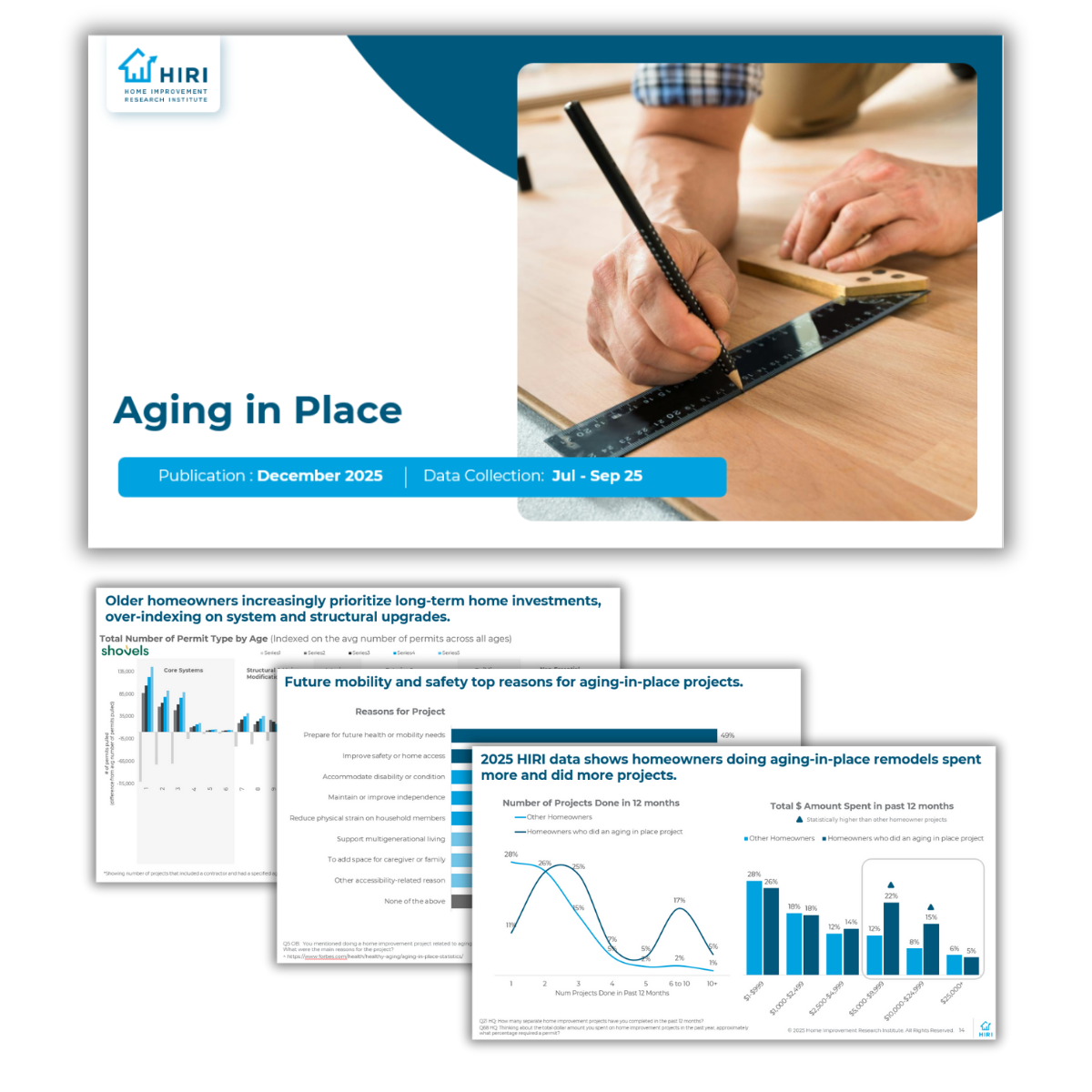
Aging in Place Remodeling Study & Analysis
As the U.S. population continues to age, the ability to live safely, comfortably, and independently at home is becoming increasingly important to homeowners and their families. HIRI’s Aging in Place Study examines how homeowners are adapting their homes to support long-term independence, accessibility, and multigenerational living—providing data-driven insight into the motivations, project types, and outcomes shaping aging-in-place home improvements today.
Objectives
Evaluate the role of influencers in the decision-making process-Explore who is involved in planning and guiding home modification decisions, including family members, healthcare professionals, and contractors.
Measure satisfaction with completed modifications and perceived impact on quality of life-Gauge how well the completed improvements meet homeowner goals and their overall impact on safety, comfort, and independence.
Past Iterations
Edit
Related Reports
Not a Member Yet?
Explore free articles, infographics, and webinars to get even more value from HIRI
Infographic
Key Homeowner and Contractor Trends in Q1 2026
Home improvement activity has been off to a slower start in 2026, with...
Infographic
What’s Driving Home Improvement Spending in 2026?
Despite a continued level of financial strain and tempered customer co...
Webinar
HIRI Home Improvement Industry & Recent Research Update - November 2026
Join HIRI Executive Director Dave King for a timely update on the late...
Fast Fact
Homeowners who finance spend nearly 3 times more per project than those who don't, $12,500 versus $4,250, despite having lower net worth.
Financed and non-financed homeowners report the same median household ...

Enter a valid email address
There was an error
Thanks for subscribing!
© 2026 Home Improvement Research Institute. All rights reserved.