
What’s Driving Home Improvement Spending in 2026? [INFOGRAPHIC]
Consumer Confidence Dips While Disposable Income Remains Steady
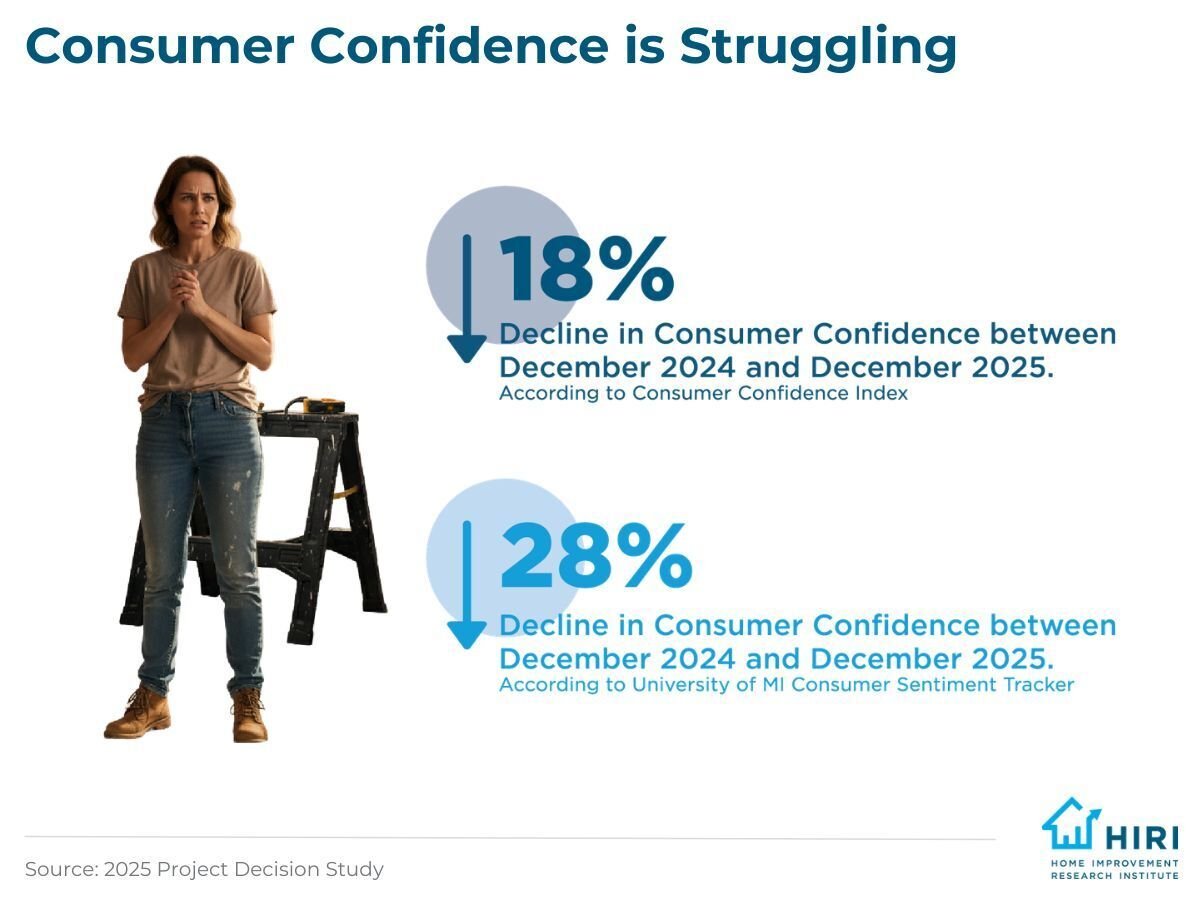
Consumer confidence is struggling in the U.S., with the Consumer Confidence Index (CCI) down more than 18% compared to last year. The consumer sentiment tracker, from the University of Michigan, reveals a similar story, dropping more than 28% from December 2024 to December 2025. However, real disposable personal income (RDPI) grew slightly from the start of 2025 through the third quarter, based on data from the U.S Bureau of Economic Analysis. Most of customers' big concerns regarding finances and the economy are holding steady, but they aren't without their reservations.
Full-time Employed and Medium-income Households Participate Most in Improvements
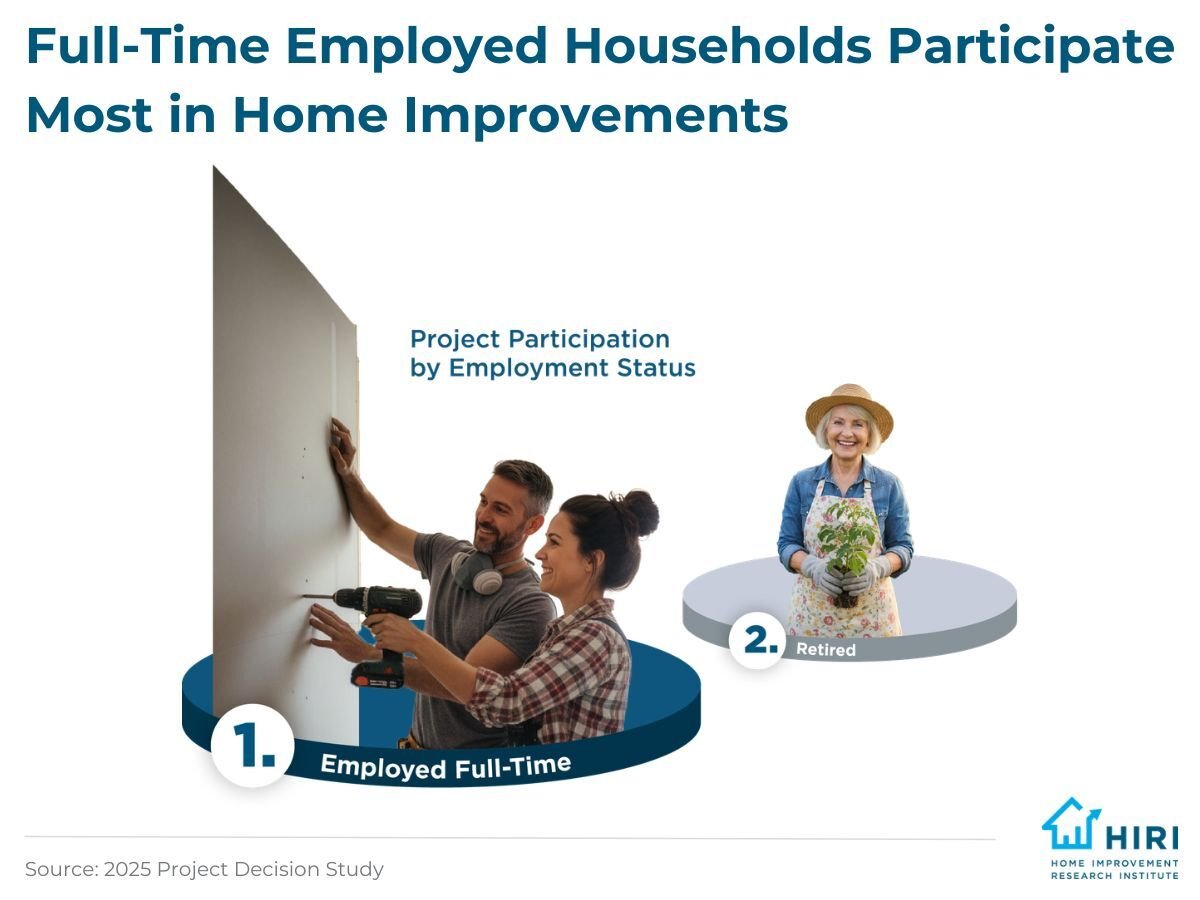
Home improvement project participation skews toward full-time employed households, with major renovations drawing the most economically active owners. Retired homeowners are typically the second-most represented demographic when it comes who is pursuing home renovations. However, that distinction is significantly less for major renovations, as well as interior finishes.
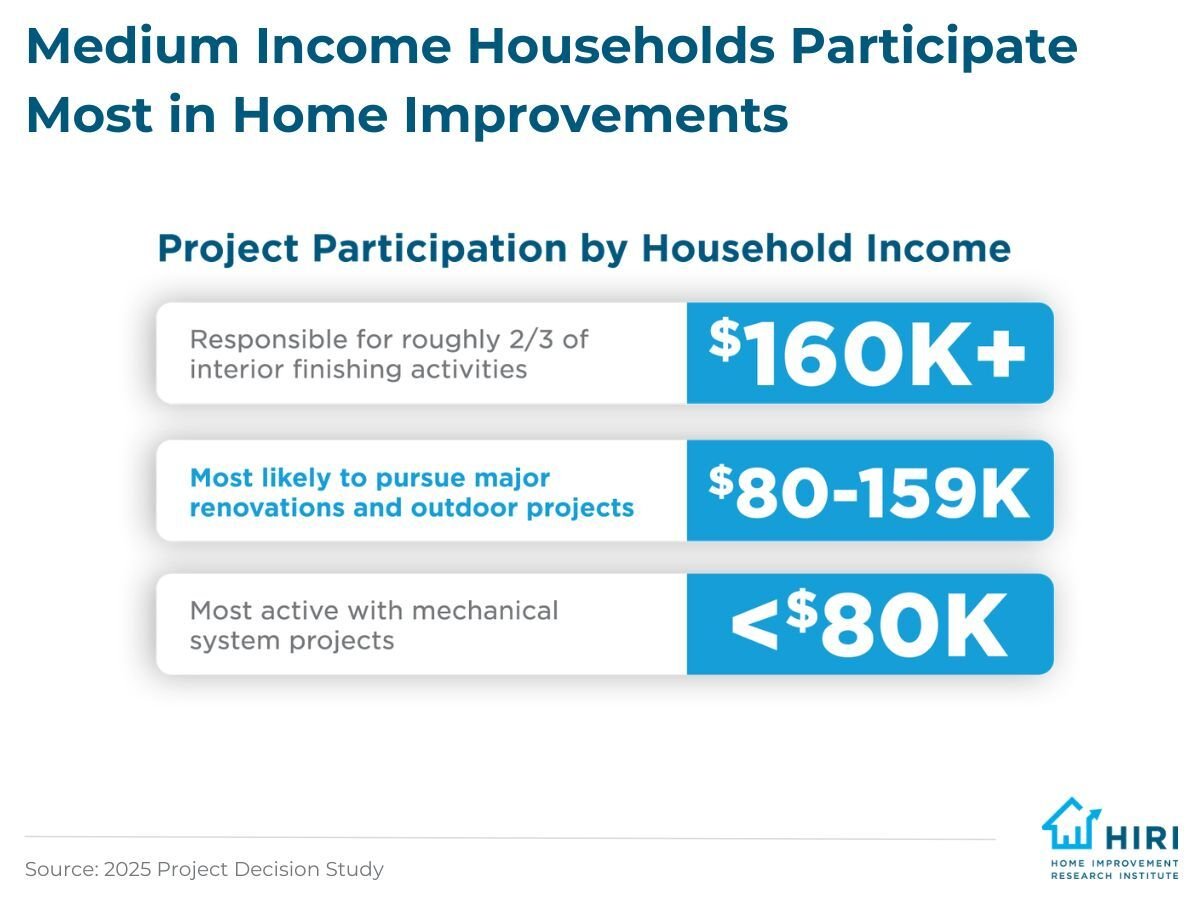
Household income also factors into project participation. About two-thirds of interior finishing activities are done by households bringing in $160,000-plus. Medium-income households ($80,000 to $159,000) are the most likely to pursue major renovations and outdoor projects, while those households making less than $80,000 are the most active with mechanical system projects.
A Majority of Homeowners Expect to Spend the Same or More on Home Improvement in 2026
While overall home improvement spending declined at the end of 2025, fewer completed projects led to higher spend per project, which implies tighter prioritization and deeper investment in essential or higher-value work. Intentions around home improvement spending seem to be steady at the start of 2026, signaling a measured and cautious outlook rather than retrenchment, with homeowners maintaining intent while calibrating budgets and project scope.
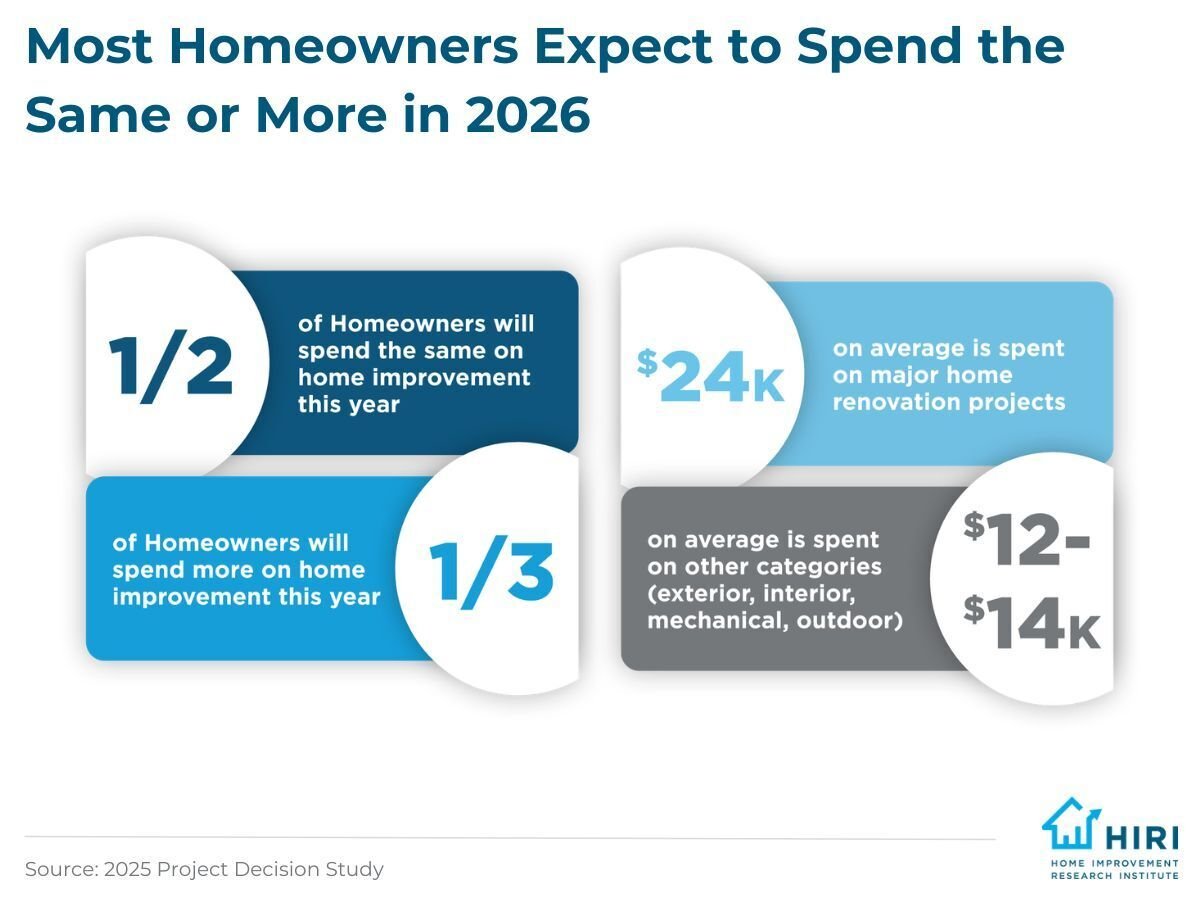
About half of homeowners expect to spend roughly the same amount on home improvement in the next year as they did in the year prior. Another third expect they will spend more in this area. Based on the project decision study, homeowners, on average, expected to spend about $3,100 on home improvement over the next 12 months.
Major renovations carry the highest average spend for home improvement projects, or nearly $24,000. Other categories – such as exterior envelopes, interior finishes, mechanical or structural upgrades, and yard, garden or outdoor projects – cluster at more moderate and consistent investment levels, or between $12,000 and $14,000, on average.
Maintenance Drives Demand in Home Improvement
Looking ahead, maintenance continues to dominate near-term home improvement plans for property owners, with about half planning to do a maintenance project in the first quarter of 2026. Another 30% are planning a home repair. Both reflect a fairly steady trend in project intention.
While 40% of homeowners feel it’s a bad time to start a large project, in the $25,000-plus range, they are feeling generally more optimistic about mid-sized and smaller projects, with about one third believing it’s a good time to start a project in the $5,000 or less range. Manufacturers can support home improvement activity by tailoring their offerings by project type and aligning financing, products, and messaging to homeowners’ distinct financial capacity and tenure.
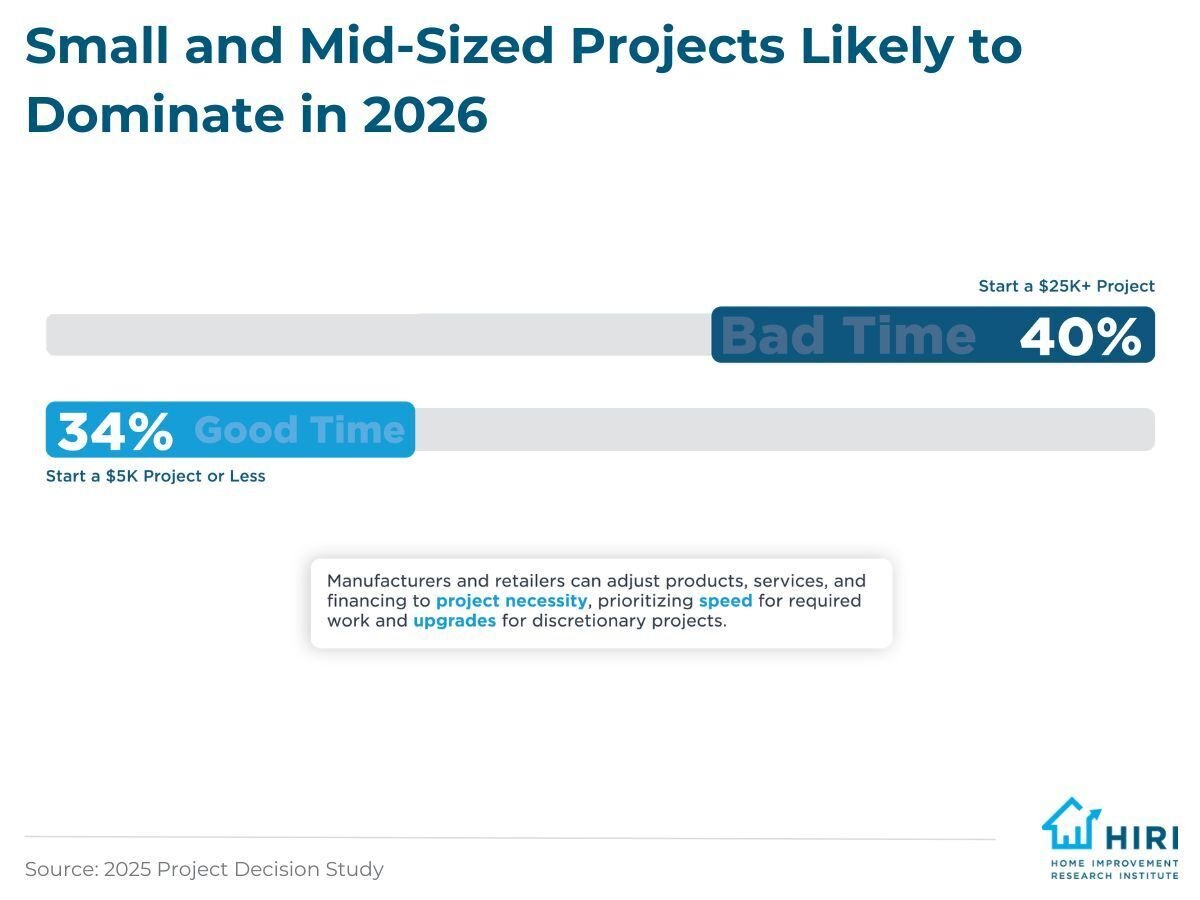
Maintenance is an especially important motivator for exterior envelopes, driving about 64% of projects, as well as mechanical systems, where it influences about 45% of projects. For other categories, maintenance is cited as a motivating factor for about one-third of activities. Manufacturers and retailers can adjust products, services, and financing to project necessity, prioritizing speed for required work and upgrades for discretionary projects.
Customers Continue Prioritizing Big Box Retailers and In-store Shopping
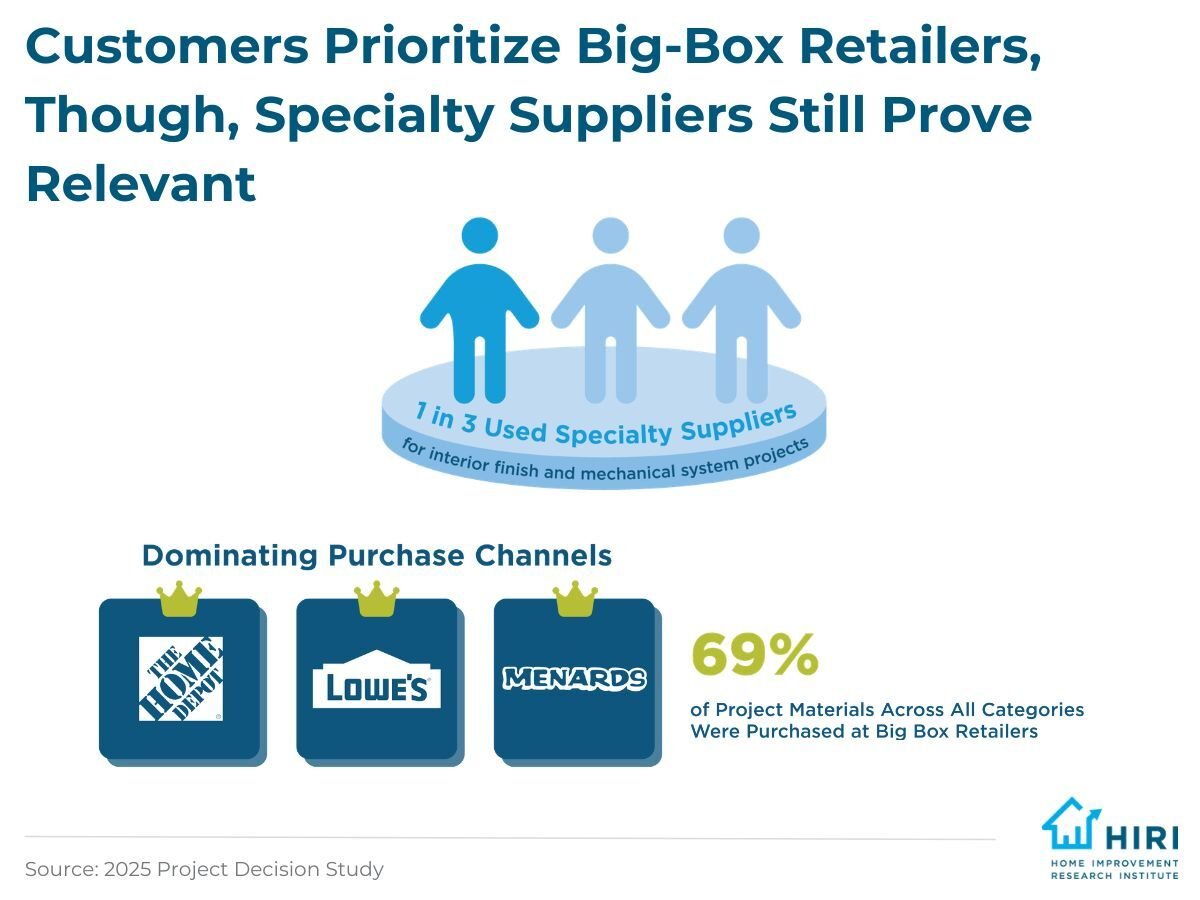
Big box retailers – such as Home Depot, Lowe’s, and Menards – remain the dominant purchasing channel for project materials, although specialty suppliers are used for about one-third of projects involving interior finishes and mechanical systems. In-store pickup also continues to be the prominent purchase and delivery method. The one exception is for mechanical materials and supplies, where online purchasing with direct delivery to the homeowner is the most common method.
Tracking Changes in Customer Sentiments and Behaviors
HIRI's 2025 Project Decision Study is a comprehensive look at customer behaviors and sentiments on projects and spending, particularly surrounding mid- to large-sized projects in the following categories: major renovations, exterior envelope, mechanical systems, interior finish, and yard, garden, and outdoor projects. For manufacturers and retailers, this research provides actionable intelligence to support strategic planning, product development, and go-to-market decisions.

Members have access to the full reports and raw data sets used to compile the information in this infographic, including the 2025 Project Decision Study.
HIRI members gain access to the raw data behind infographics like this one, to slice-and-dice the raw data to suit the needs of their own customer insights teams and answer cross-departmental questions about how to take home improvement products to market.
Join the ranks of the top manufacturers and retailers in the home improvement space. Book your membership consultation to learn more about what kinds of member exclusive information your team would have access to.