
Master bathroom remodeling is a popular home improvement project for a few reasons. These spaces get plenty of daily use for a multitude of personal and important uses. Individuals often perceive the master bathroom as a haven, one where they expect a certain level of comfort, privacy, and convenience.
Additionally, they require regular maintenance and upgrades to ensure the various features and fixtures-from electricity and plumbing to flooring, vanities and wall finishes-are kept up to date, which means functioning properly, looking attractive, and catering to the evolving lifestyles of homeowners.
The Home Improvement Research Institute provides HIRI members with extensive data covering market trends and forecasts, enabling building product manufacturers to understand how and why property owners take on master bath remodels, whether on their own or with the help of a professional contractor, and prepare accordingly.
Master Bathroom Remodeling Market Size and Forecast for 2026-2030
In general, consumer spending is expected to pick up in 2026, after slowing in 2025. Helped in part by recent productivity gains, income growth is likely to increase this year, based on findings in HIRI’s U.S. Home Improvement Products Market Forecast. However, prices are also rising, and inflation remains elevated in the forecast, which may impact consumer spending.
Finally, when manufacturing bathroom remodel products and plumbing supplies, it's important to make sure you're developing and distributing items that integrate and/or are compatible with newer technologies to meet rising demands.
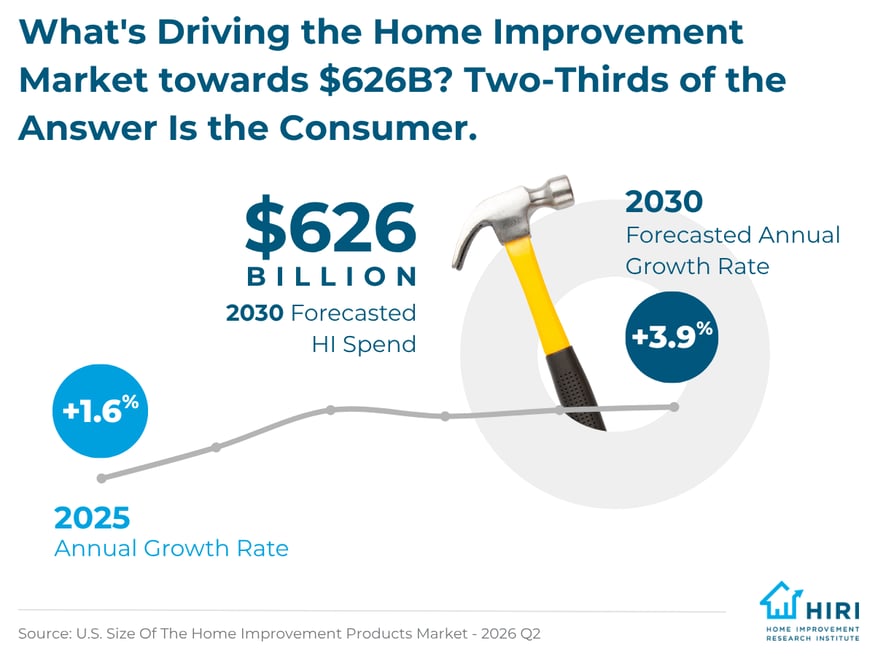
HIRI’s research shows that, for DIY homeowners, the markets pertaining to products frequently used in bathroom remodeling projects show a modest compound annual growth rate (CAGR) from 2026 to 2030. For example:
- Plumbing supplies (2.9% CAGR)
- Hard-surface floor coverings (4.4% CAGR)
- Kitchen and bath cabinets (3.7% CAGR)
- Paint and preservatives (4.2% CAGR)
The outlook for the pro markets for these products is similar. After experiencing notable growth from 2020 to 2025, future growth projections are much more conservative:
-
Plumbing supplies (2.3% CAGR)
-
Hard-surface floor coverings (2.1% CAGR)
-
Kitchen and bath cabinets (2.2% CAGR)
-
Paint and preservatives (1.7% CAGR)
Home builders and remodelers are facing their own challenges currently. While the housing market is in the early stages of recovery and demand for remodeling remains steady, especially in core areas like bathrooms, pro companies have to contend with higher prices for materials, uncertainties surrounding tariffs, and a tight labor market.
What is the Average Cost of a Bathroom Remodel in 2026?
HIRI's 2025 Project Decision Study revealed that the average spending on bathroom remodeling was $12,061 and the median spend was $7,800. Please note that this study surveyed homeowners who completed projects that cost $5k or more, so the averages are also based on that minimum threshold.
The cost can vary significantly (from a couple of thousand to upwards of $30k) based on several factors, including:
- Scope of work
- Size of the space
- Types of materials used
- Customizations
- Labor used for the project
HIRI’s Project Decision Study for mid-to-large interior projects, which includes bathroom renovations, found that, of bathroom projects completed by homeowners in the past year,
- Nearly half fell into the $5k to $9.9k range
- 36% were in the $10k to $24.9k range
- 11% were in the $25k to $49.9k range
- 3% were in the $50k-plus range
When HIRI asked what percentage of the spending on large projects went to each category, the responses, project costs for bathroom remodels reflect a common split between contractor labor and materials. For homeowners who invested in a mid-to-large bath project in 2025, about 69% of the cost went to a paid contractor (the highest for any interior finish project) and 28% went to purchasing materials and products.
What Consumer Behaviors Drive Purchases and Project Decisions for Bathroom Remodeling?
Master bathroom remodels can run the gamut from cosmetic touch ups and refreshing the design to moving walls to change the floor plan, expand the space, or add new fixtures. They include a variety of materials and products, including cabinets, countertops, paint, flooring, plumbing fixtures, showers, bathtubs, and general building and plumbing supplies.
Here are some of the trends in customer behaviors around bathroom remodeling projects and project purchases that emerged from HIRI’s Project Decision Study for Interior Finish and other research:
1. Bathrooms Remain a Top Priority for Home Improvement
Bathrooms, along with kitchens, are one of the core areas that homeowners target when they want to improve the comfort and functionality of their living space. Based on findings in HIRI’s Quarterly Homeowner Project Activity Tracker for Q1 2026, bathrooms were involved in about 46% of home improvement projects in the past 90 days, compared to 40% in the same quarter of 2025. When asked what type of professional they hired for their project, about 16% responded kitchen/bath contractor and 19% responded plumbing contractor, while general contractors and remodelers are still the most commonly hired. The main benefits that homeowners have received from having completed bathroom remodels and renovations in 2025 include:
- Increased value (65%)
- Improved comfort (65%)
- Enhanced aesthetics (54%)
What Percentage of Homeowners are Planning to Remodel Their Bathroom this Year?
About 21% of homeowners are planning to do a medium-to-large sized bathroom remodel this year, based on the quarterly tracker. Along with interior painting (which also may involve bathroom spaces), this project category leads in planned activity for 2026, demonstrating the resilient value of bathroom remodeling to homeowners who are looking to improve their living space.
2. A Majority of Bathroom Remodels Incorporate Professional Help
HIRI’s Project Decision Study for Interior Finish found that for bath remodeling:
- 72% of projects used contractors
- 22% of projects used both DIY and contractors
- 6% of projects used only DIY and/or help from family/friends
However, this study focused on households who spent more $5k on their projects, so these completion patterns reflect larger jobs, where professional labor is more common. For bathroom remodeling, enjoying the work is the main driver of choosing DIY. Only 28% of homeowners felt it was cheaper if they did the work, whereas that is a motivation for nearly two-third of homeowners for every other interior project.
The main reasons why homeowners choose to hire professionals for bathroom remodeling are:
- Work quality (76%)
- Technical expertise (60%)
- Ease and convenience (55%)
Design professional use grows with project complexity. About 78% of homeowners don’t use an interior designer or architect for their bathroom remodel. When they are used, interior designers are hired about three times more frequently than architects.
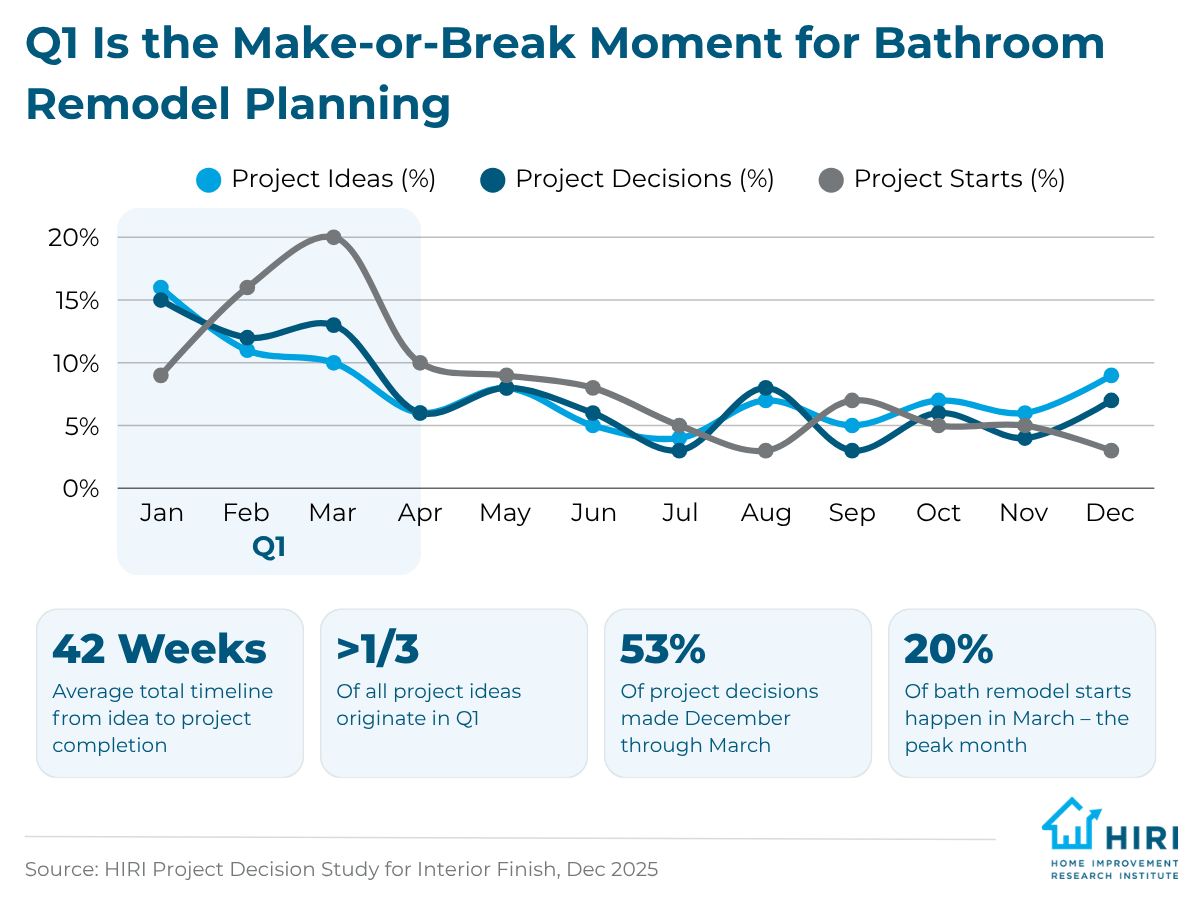
3. Homeowners Typically Conceptualize and Start Bathroom Remodels in Q1
On average, bathroom remodels take about 42 weeks to complete, from the idea to completion. About 17.8 hours are spent in the idea-to-decision stage, and then it’s another 13.7 weeks, on average, from deciding to do the project to actually starting. Projects themselves take about 10.4 weeks from start to finish.
More than one-third of project ideas occur in the first quarter of the year, and about 53% of project decisions occur between December and March. The month with the highest project starts is March (20%), followed by February (16%). About 35% of bathroom remodels are completed from April to June, and another 10% are completed in September.
4. Customers are Primarily Purchasing Products for Bathroom Remodels at Big-Box Retailers
Improving aesthetics and increasing functionality are the main drivers behind bathroom remodeling projects. Based on findings from HIRI’s Project Decision Study for Interior Finish, the products purchased most frequently for bathroom remodeling projects include:
- Flooring
- Interior paint
- Finished plumbing
- Cabinets
Where are Customers Buying Products for Bathroom Remodels?
As with other home remodeling projects, in-store purchases far outpace online purchases when it comes to plumbing and bath products. There also haven’t been significant shifts in purchasing channels over the past couple of years.
In 2025, customers purchased products for bathroom remodels at:
- Big-box retailers (71%)
- Specialty suppliers (38%)
- Online-only retailers (26%)
- Direct from manufacturer (19%)
- Local hardware stores (19%)
- Mass retailers (17%)
- Lumber yard/building material dealers (17%)
- Warehouse clubs (5%)
Purchase and delivery methods also mirror broader trends for interior projects, with in-store purchasing and pickup used for 57% of bathroom projects. However, in-store purchasing and delivery is used notably more for bathroom products and materials (55% of the time) compared to all other home improvement projects (40%).
5. Energy Efficiency and Technology Integration are Current Trends in Master Bath Remodeling
One current trend for remodeling is the desire to make master bathrooms more energy efficient, which consumers see as a long-term investment. Tools like water assistants can help monitor water usage and identify if there are issues leading to waste, or there are water recyclers that reuse water from baths, showers and washing machines for outdoor irrigation or even toilets.
Additionally, purchasing behaviors show a trend toward new bathroom-related technologies that are aimed at improving physical and mental health; providing a seamless experience; and customizing the space for unique needs and lifestyles.
For instance, there is a growing demand for touch-free or hands-free faucets in master bathrooms. Some other newer technology being integrated in master bath remodels include:
- Chromotherapy and aromatherapy devices
- Integrating Artificial Intelligence (AI) through smart thermostats, voice assistants, and wirelessly connected appliances
- Smart toilets and showers
- Floor heating systems
- Flotation tubs
6. Bathroom Remodeling Behaviors and Intentions Vary Among Generations
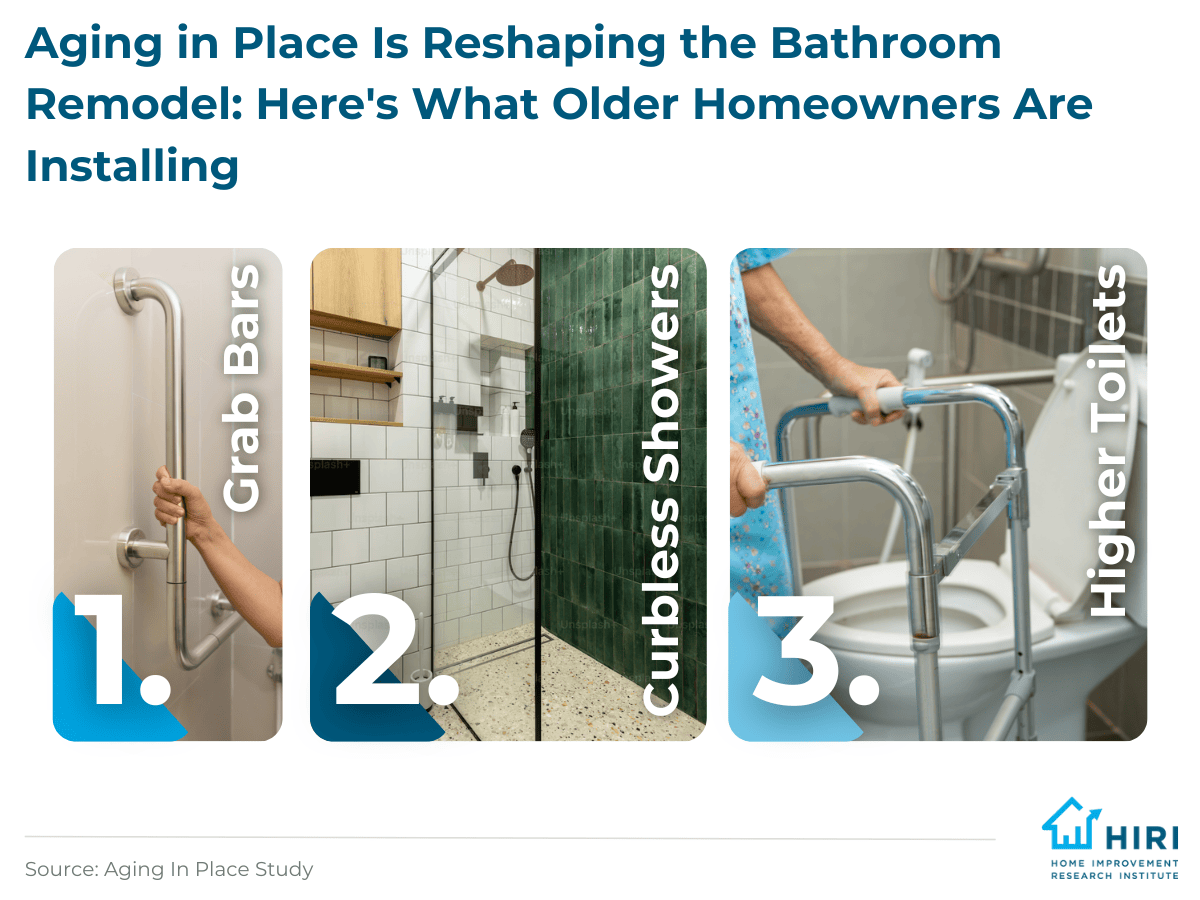
Millennials are becoming a significant purchaser group for bathroom remodeling products and supplies, and Gen Z are also expanding their presence in the home improvement market as they advance toward their mid-to-late 20s. This is important to keep in mind when designing and marketing master bathroom remodeling products and supplies. Building products brands are typically targeting older individuals who are in their 60s and 70s or younger homeowners in their 30s and 40s, and their motivations for remodeling a master bathroom will vary. For example, older homeowners are more likely to be upgrading for the purpose of improving livability and accessibility, which includes installing accessible showers, bathtubs and toilets. Meanwhile, Millennials might be remodeling a master bathroom in their first home or an older house so that it better fits their tastes and lifestyle.
Responding to Market Expectations and Trends in 2026
Bathrooms represent a space within the home where there is a lot going on: plumbing, electricity, high moisture exposure, the need for privacy, and daily use. Individuals want to make sure they're making the right decisions to maximize the functionality, comfort, convenience, and durability within their master bathroom.
For bathroom projects, customers rely on a variety of sources to get information, ideas or advice, according to HIRI's Project Decision Study for Interior Finish. For example, for bathroom remodeling in 2025:
- Home improvement apps/websites were used for 30% of projects
- Social media was used for 25% of projects
- Manufacturer/store displays/brochures were used for 15% of projects
- Retailer websites were used for 14% of projects
- Manufacturer websites were used for 11% of projects
Family and friends, industry professionals, and neighbors are also utilized for information and tips, demonstrating that homeowners want insights for their projects. Vendors and suppliers who meet this need and provide marketing and customer service that is informative, insightful, and easy to understand can give themselves a competitive edge. Being an authoritative source to provide advice and tips will help you motivate consumers to choose your brand over others when making their purchasing decision.
Finally, when manufacturing bathroom remodel products and plumbing supplies, it's important to make sure you're developing and distributing items that integrate and/or are compatible with newer technologies to meet rising demands.
Getting Information and Insight on Master Bath Remodeling
For building professionals and suppliers, HIRI is a comprehensive source of data and insights. By becoming a member, you have access to research from a wide variety of brands and companies in the home improvement industry, and it's available wherever and whenever you might need it.

FAQs:
How is the bathroom remodeling market expected to change this year?
The markets pertaining to products frequently used in bathroom remodeling projects show a modest compound annual growth rate (CAGR) from 2026 to 2030, for both consumer and professional customer segments. This includes plumbing supplies; hard-surface floor coverings; kitchen and bath cabinets; and paint and preservatives. The Home Improvement Research Institute’s U.S. Home Improvement Products Market Forecast (updated regularly) gives a detailed look at the forecasts for these and other product categories used in home improvement. Additionally, HIRI’s 2025 Project Decision Study for Interior Finish goes in-depth into homeowners’ behaviors, attitudes, and product-purchasing decisions related to bathroom remodeling and other interior improvement activities.
What are the most popular bathroom renovations right now?
Some of the most popular bathroom renovations right now include smart technology integration, wellness-focused designs, and enhancing accessibility for aging-in-place. As the housing stock in the U.S. continues to age, bathrooms are also a focal point for updating plumbing systems and upgrading older fixtures. You can find data about bathroom remodeling and renovations in the Home Improvement Research Institute’s 2025 Project Decision Study for Interior Finish. Additionally, HIRI’s Aging in Place Study highlights how bathrooms factor into improving residential spaces to make them more comfortable and suitable for older adults, while also supporting multigenerational living.
Are more people choosing DIY or hiring professionals for bathroom remodels?
Bathroom remodels can range significantly in size, scope, and price, which influences whether homeowners pursue projects as DIY or hire professionals. According to the Home Improvement Research Institute’s Project Decision Study for Interior Finish (which focused on mid-to-large projects, costing $5K+), about 72% of projects utilized contractors and only 6% were DIY, with 22% of projects involving a combination of some sort. Notably, saving on costs is not nearly as big a driver for doing bathroom remodels DIY as it is for other interior projects. The main reasons why homeowners choose to hire professionals for bathroom remodeling are work quality, technical expertise, and ease and convenience.
Are more people choosing DIY or hiring professionals for bathroom remodels?
Because of the complexity of bathroom spaces, which often integrate plumbing and electricity along with critical fixtures, more homeowners choose to hire professionals for bathroom remodels, rather than using a DIY approach. The Home Improvement Research Institute’s 2025 Project Decision Study for Interior Finish (which focused on mid-to-large-sized projects, costing $5k+) found that for bath remodeling, 72% of projects used contractors and 22% of projects used both DIY and contractors, while only 6% of projects used strictly DIY labor and/or help from family/friends. The main reasons why homeowners choose to hire professionals for bathroom remodeling are work quality, technical expertise, and ease and convenience. Notably, when it comes to bathroom remodeling, only 28% of homeowners feel it is more cost-effective for them to do the work, whereas that is a motivation for nearly two-thirds of homeowners for every other interior project.