
There are several factors that influence homeowners in the United States when comparing and purchasing home improvement products: price, quality, and availability, to name a few. Where the product was manufactured is also an important consideration for many customers.
The term “Made in America” carries an array of connotations. For some, it is associated with superior craftsmanship and quality. For others, there’s an ideological pull to make purchases domestically, regardless of how products measure up to their imported counterparts.These perceptions surrounding trust, quality, and brand reputation are shaped by a few key variables, such as age, DIY experience, and, most importantly, political leaning, as demonstrated by data from the Home Improvement Research Institute’s recent Made in America study. We wanted to explore how and why customers value “Made in America” labels when purchasing home improvement products, providing manufacturers, retailers, and marketers with valuable insights into consumer behavior, brand trust, and the evolving significance of domestic production in the home improvement market.
How Do Homeowners Feel About American-Made Products?
In general, there is a strong preference among homeowners for American-made products and supplies, and manufacturers can leverage these positive perceptions about credibility and quality to drive sales in the home improvement market. To do that successfully, it’s important to understand variations among different demographics.Here are a few of the trends that emerged in our Made in America study and how they can be used to help effectively finesse your marketing messages and other brand considerations:
1. Homeowners are Somewhat Influenced by “Made in America” Label
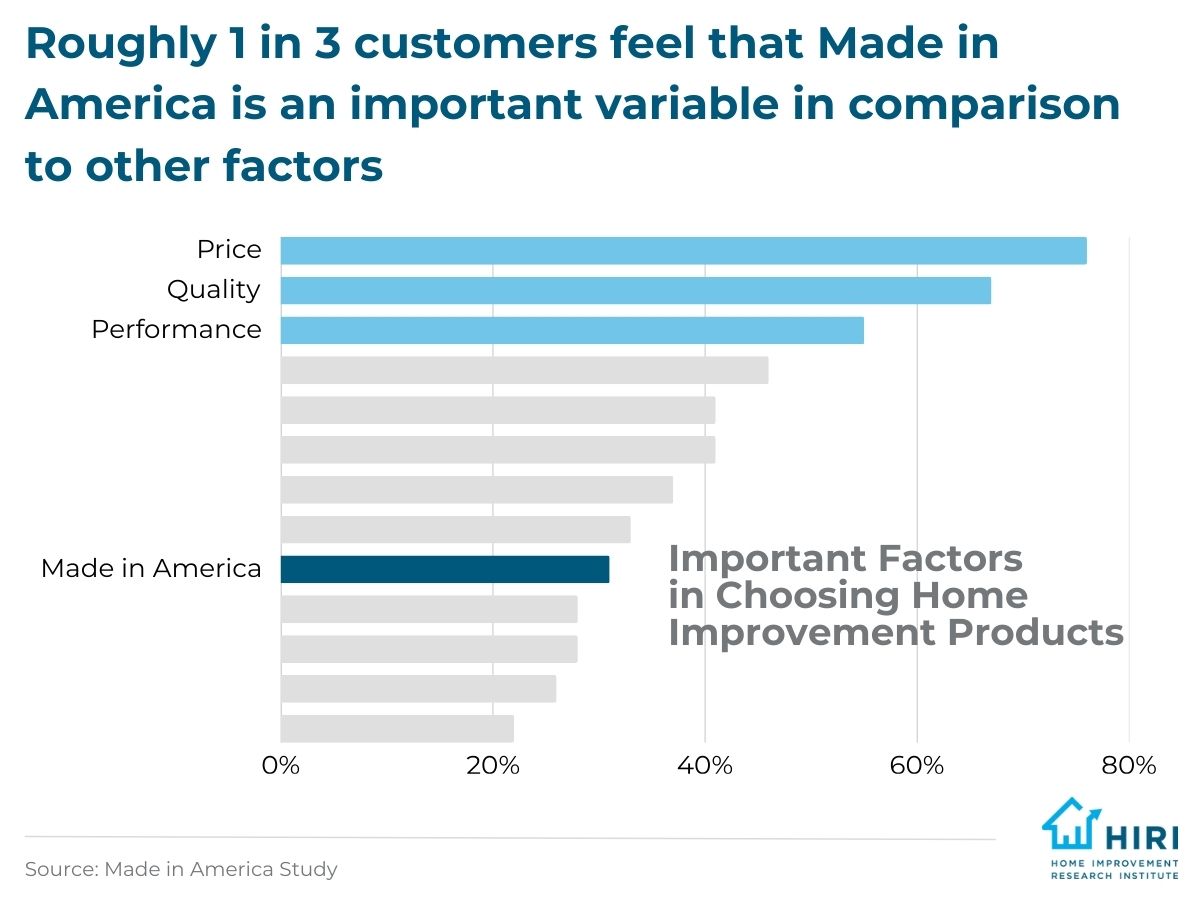
Our research shows that being “Made in America” continues to have some influence on homeowners' decisions when purchasing home improvement products, from tools and hardware to paint and other supplies. Roughly 1 in 3 customers feel that it’s an important variable in comparison to other factors, such as quality, durability, and, most predominantly, price. For example, the country of manufacturing origin carries only about 40% the weight of price. There is an advantage to manufacturers and suppliers in carrying and highlighting “Made in America” products, but it isn’t likely to overcome shortcomings or challenges in regards to the several other attributes that homeowners are taking into consideration when making their decisions.
2. Political Orientation Drives Importance of “Made in America”
The preference for “Made in America” is broad, yet largely ideological. Political orientation, as opposed to age or income, is the driver of variations, with nearly 41% of conservative-leaning homeowners expressing the importance of American-made products, compared to only 17% of liberals. Additionally, there are some notable variations among different generations, with Boomers and Silent Generation homeowners putting a greater emphasis on this factor. To connect with prospective and existing customers, it’s important for brands to understand how country-of-origin preferences are often rooted in their value system or worldview, rather than being driven by economic differences.
3. Advanced DIYers Demonstrate Strongest Loyalty to U.S. Manufacturing
Confidence in American-made products is nearly universal, strengthened by hands-on experience and familiarity. However, our research shows that advanced DIYers and urban homeowners express the strongest loyalty to U.S. manufacturing, associating it with superior craftsmanship and reliability. Once bitten, twice shy, perhaps.That doesn’t mean non-DIYers or novice DIYers find the “Made in America” designation irrelevant; they just tend to put less weight on it, with a majority expressing that it is “somewhat important,” rather than “highly important,” or one of their top priorities. Hands-on experience and exposure to a wide variety of projects drive homeowners’ trust and preference for domestic products.
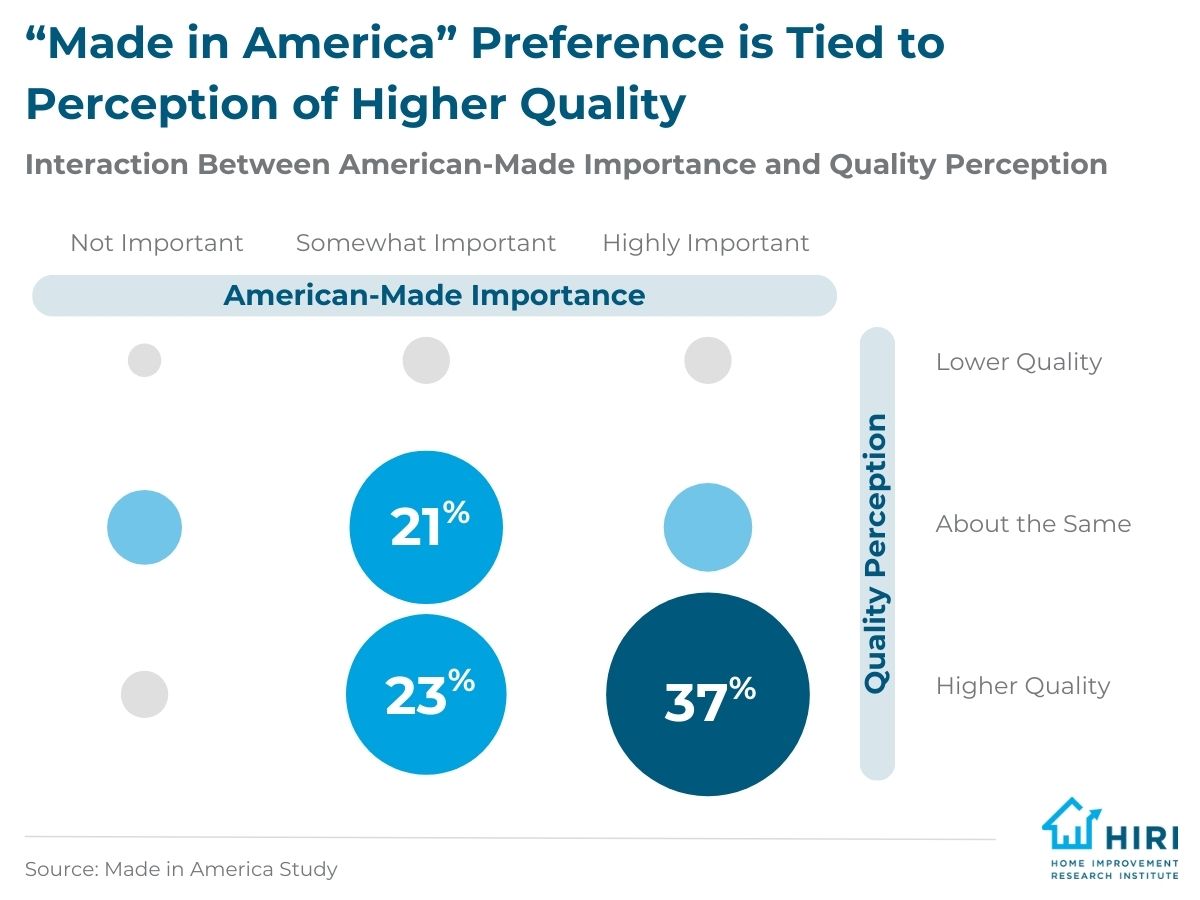
4. “Made in America” Preference is Tied to Perception of Higher Quality
Among those who value American-made products, a majority rate their quality higher, showing strong belief consistency. For most homeowners, a preference for home improvement supplies and materials made in the U.S. is influenced by a belief that they’re superior in performance, durability and overall quality. This leads to a sort of feedback loop between belief, experience, and perceived quality, where positive associations with “Made in America” products are often shaped by firsthand familiarity. As a manufacturing company, you can tap into this feedback loop and connect with customers by reinforcing American-made quality through performance proof and craftsmanship storytelling. This can help strengthen brand loyalty among skilled and value-conscious homeowners, capitalizing on the trust that is built over time.
5. Price Perceptions are Influenced by Age and Gender
Since price is often the top priority for homeowners, it’s vital to understand how it intersects and relates to other influences, especially when it comes to “Made in America” products. For example, younger and female owners expect larger price gaps when they’re purchasing domestic materials and supplies for their home improvement projects. Meanwhile, older and male buyers perceive smaller gaps. As part of your marketing strategy, incorporating strong value messaging can narrow skepticism among customers. They can be swayed by the superior durability, performance and quality of a product, but they have to feel like they are getting the best value for their dollar.
6. U.S. Has Advantage Over Other Countries in Manufacturing Preference
The country where a product is manufactured is a strong driver when customers in the U.S. are making selections of home improvement products. In fact, it tends to lead to purchase decisions, in combination with factors such as online reviews and price, reflecting a balance of origin, trust and value. Based on our research, American-made products hold a significant advantage over other North American countries, as well as China and Europe, even when it comes to top-rated products. When all other attributes are equal, American-made products hold an approximately three-to-one advantage over imports. Our Made in America study goes more in depth about different homeowner types and which countries and regions they would prefer to buy their home improvement products from.
7. Canadian Manufacturing Shows Potential for Closing Gaps
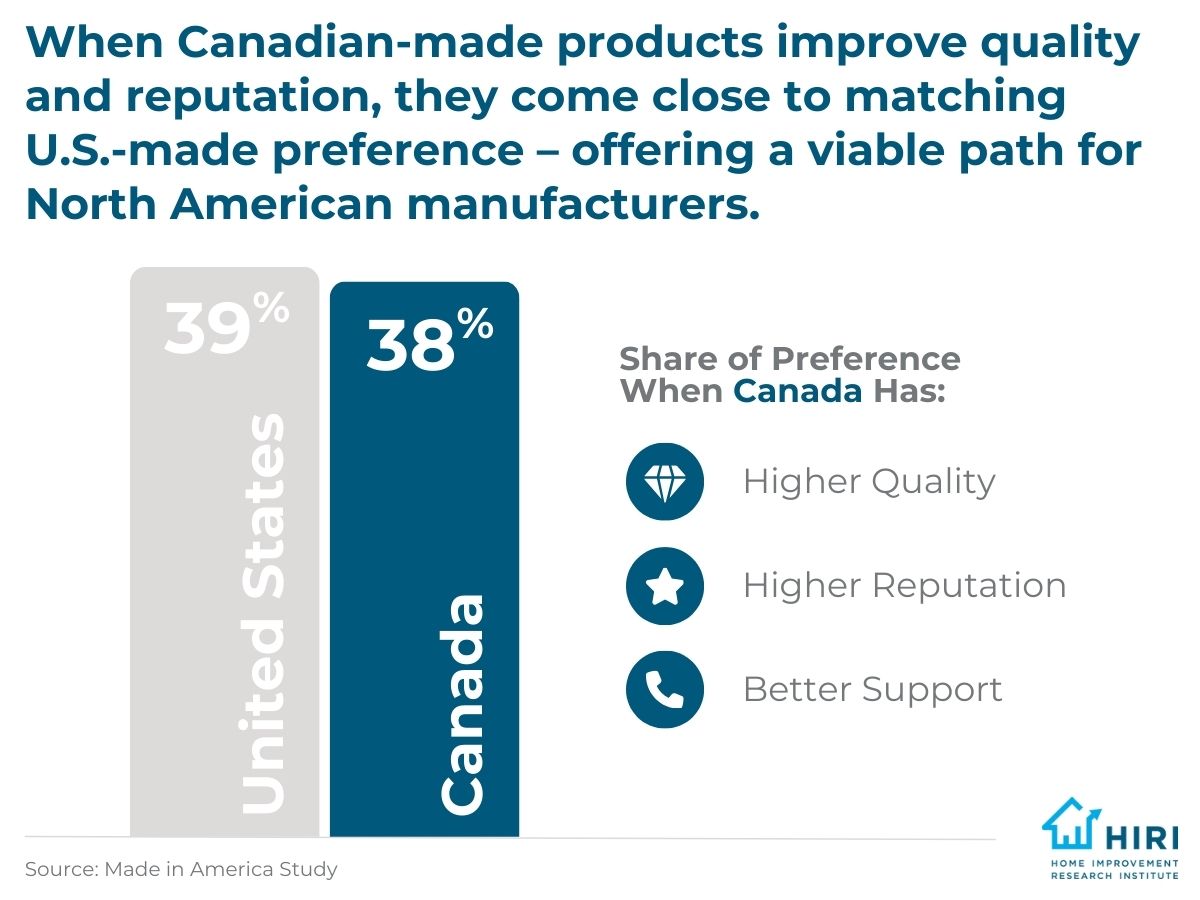
Among certain demographics, Canadian-manufactured products also hold a bias. About 73% of liberals show a preference for home improvement goods manufactured in Canada, compared to 64% of moderates and 57% of conservatives. Additionally, the data in our study offers a realistic competitive roadmap for North American manufacturers, providing insight into how they can close existing preference gaps with American-made products. For example, by enhancing their online reputation and reviews, and improving quality, Canadian manufacturers can narrow the advantage, bringing their product perception nearly even with U.S. goods.
8. China-Made Products Suffer from Trust Deficit
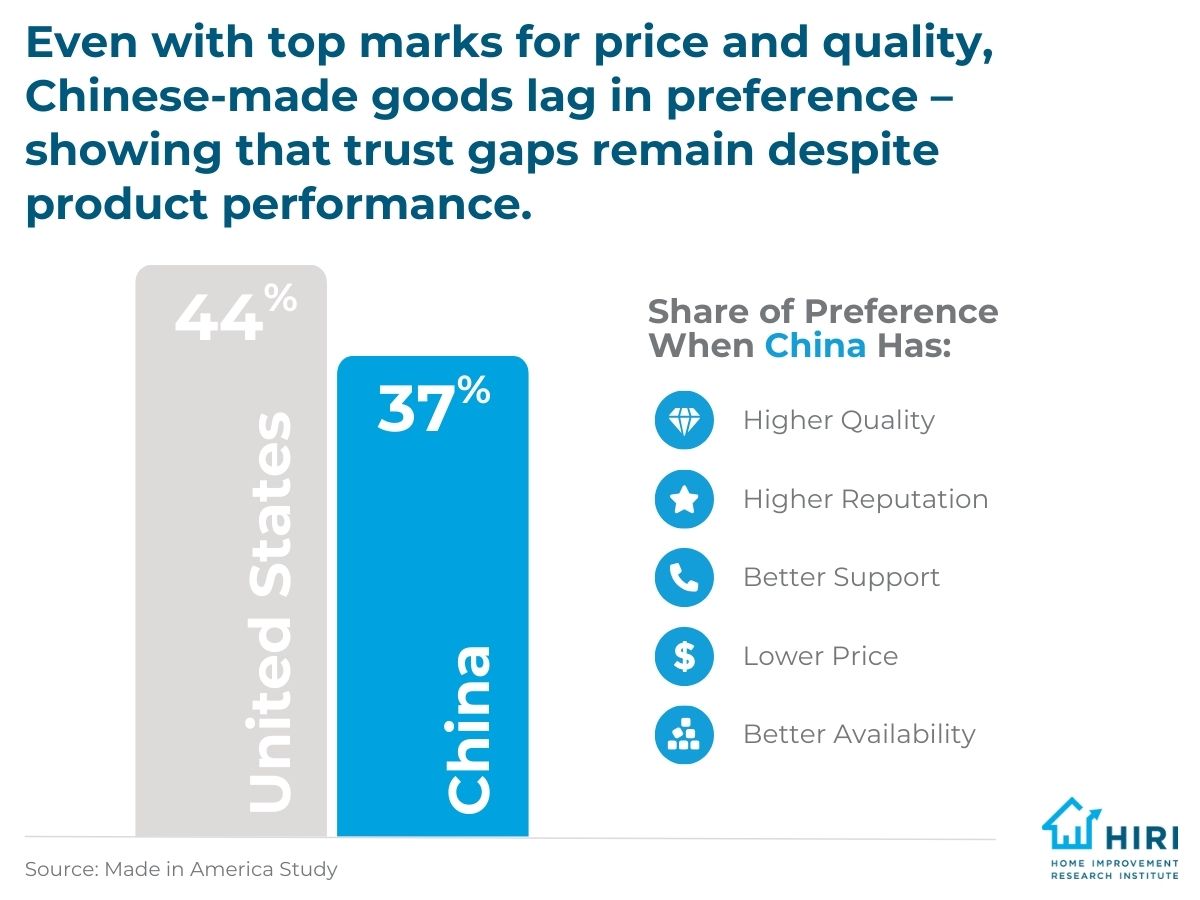
Even with top ratings for price and quality, Chinese goods still lag behind American-made options among many homeowners in the U.S., which is true even when comparing highly rated Chinese-made products with American-made options that are only average rate. Even improving a number of attributes—including price, quality, availability, customer support and online reputation—doesn’t result in parity among Chinese-made and American-made products. This trend reveals deep-rooted prejudices among certain U.S. homeowners that cannot be easily erased. There are some shifts in this area, though, with younger generations demonstrating a greater openness to selecting products from China than older cohorts.
9. Beliefs in Tariff Fairness Influence Decision-Making for Domestic Goods
Research shows that awareness and understanding of tariffs rise with DIY engagement, sourcing experience, and product knowledge. For example, 67% of advanced DIYers are familiar with current U.S. tariffs on imported items, compared to 31% of novice DIYers and 20% of non-DIYers. However, it’s not just familiarity with tariffs that shape how customers respond to them when choosing domestic products. Rather, these decisions are frequently shaped by perceptions of fairness. Those who perceive tariffs as fair, or a balanced policy rather than a penalty, are more likely to buy American-made products. To transform understanding and fairness perception into pro-manufacturing action among your customers, consider linking tariff fairness to product value and job support.
10. Tailoring Messaging and Pricing can Capitalize on “Made in America” Preferences
In the Made in America study, three homeowner segments emerged around origin attitudes: Continental Preference favors U.S. and Canada for value; American Product prioritizes domestic quality and fairness; and Global Pragmatists emphasize price and practicality, shifting toward American-made only when costs rise. As a manufacturing brand, it’s important to tailor your messaging, pricing and product positioning according to these different mindsets, aligning with each segment’s unique blend of value, trust and practicality.
Exploring the Data on American-Made Home Improvement Products
“Made in America” may hold a certain appeal among homeowners, but there is more to the story in terms of how that attribute is weighed and measured against other factors that drive their purchasing decisions. Download our Made in America study to take a closer look at the numbers and gain valuable insight for your manufacturing brand.