
Motivating Homeowners to Pursue Energy Retrofits [INFOGRAPHIC]
Broad Adoption Driven by Practical Necessity
More than eight in ten homeowners have completed an energy retrofit in the past five years, led by essential upgrades such as energy-efficient windows and doors, improved insulation, and high-efficiency HVAC systems. These necessity-driven improvements reflect the strong influence of rising energy costs, aging equipment, and the promise of long-term household savings. Discretionary technologies, including solar panels, battery storage, and EV charging stations, lag behind significantly in comparison.
Adoption Is Strongest Among Young, Affluent, and Urban Homeowners
The study shows that retrofit participation is closely tied to capacity. Younger and higher-income homeowners are far more likely to have completed energy-efficiency projects, while adoption falls among older and lower-income groups. Urban households also outpace rural households in both completed and planned retrofits, reflecting differences in familiarity with incentive programs, confidence in return on investment, and access to qualified support.

Looking Forward: Planned Projects Center on Practical Efficiency
Looking ahead to the next 12 months, six in ten homeowners are planning an energy-efficient upgrade. Their focus remains on pragmatic improvements such as new windows and doors, smart thermostats, improved insulation, and water-saving plumbing fixtures. Aspirational upgrades—including solar, heat pumps, and EV charging—remain secondary priorities, though interest increases among younger, urban, higher-income, and advanced DIY households. Government incentives act as an accelerant, influencing planning nearly twice as much as familiarity alone.
What Motivates Homeowners to Invest
Practicality is the dominant force. Homeowners are most motivated by lowering utility bills, protecting against rising energy costs, maintaining or increasing home value, and replacing old equipment. For Millennials, Gen Z, and urban homeowners, improving air quality, reducing environmental impact, and adopting innovative technologies carry more weight. This shift underscores important differences in how segments perceive value beyond cost savings.

The Repair-Replace Moment as a Trigger
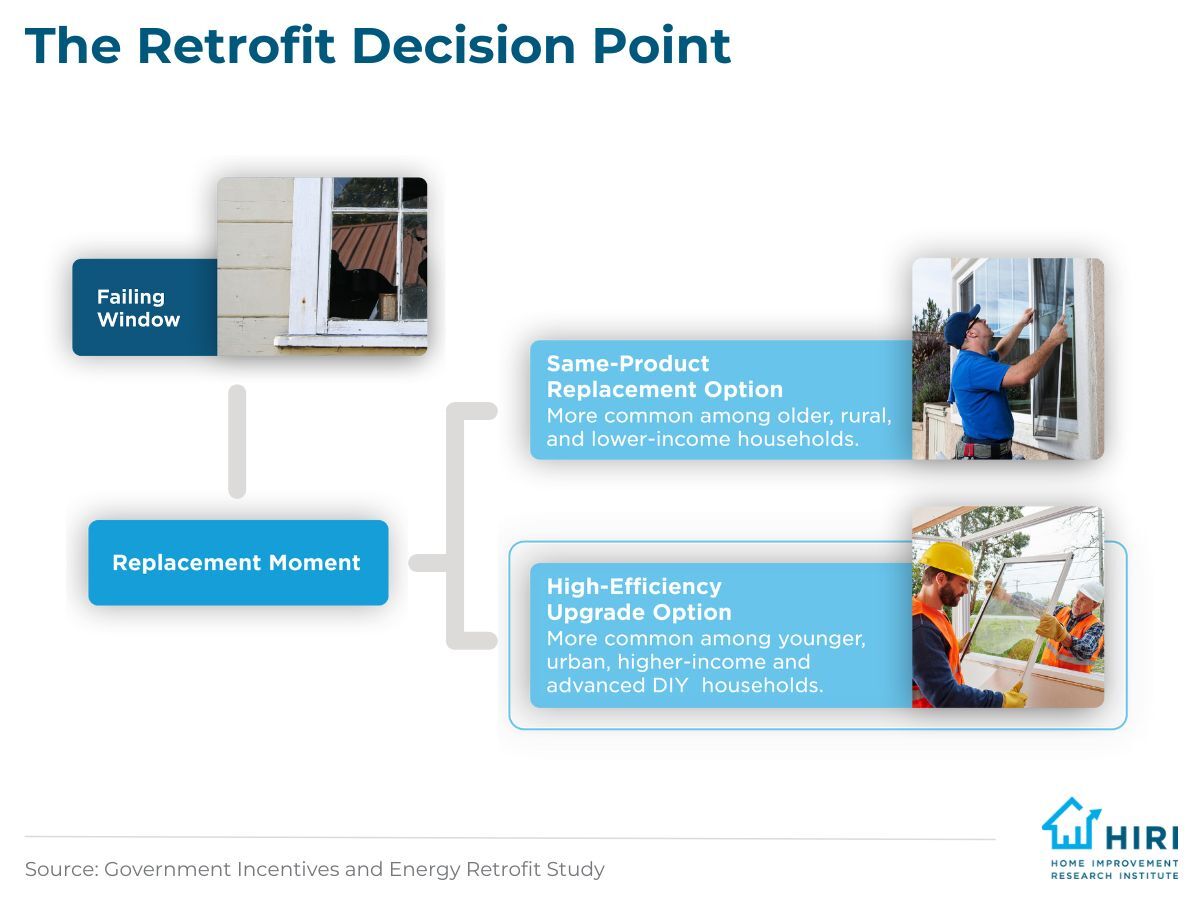
Replacing old or failing equipment is a key inflection point, with many homeowners choosing to upgrade to more efficient or renewable options when a replacement is already required. The study confirms that efficiency upgrades are perceived as providing better long-term value, making this a critical moment for product messaging, retail recommendations, and contractor influence.
Incentives Amplify Existing Motivations
Although government incentives rarely serve as the primary motivation, they meaningfully influence decisions—especially among younger, urban, higher-income, and advanced DIY households. Older, rural, and lower-income homeowners remain less responsive, often because incentives feel less accessible or credible. Incentive programs work best when aligned with practical triggers such as equipment replacement or expected cost savings.
Barriers That Manufacturers Can Address
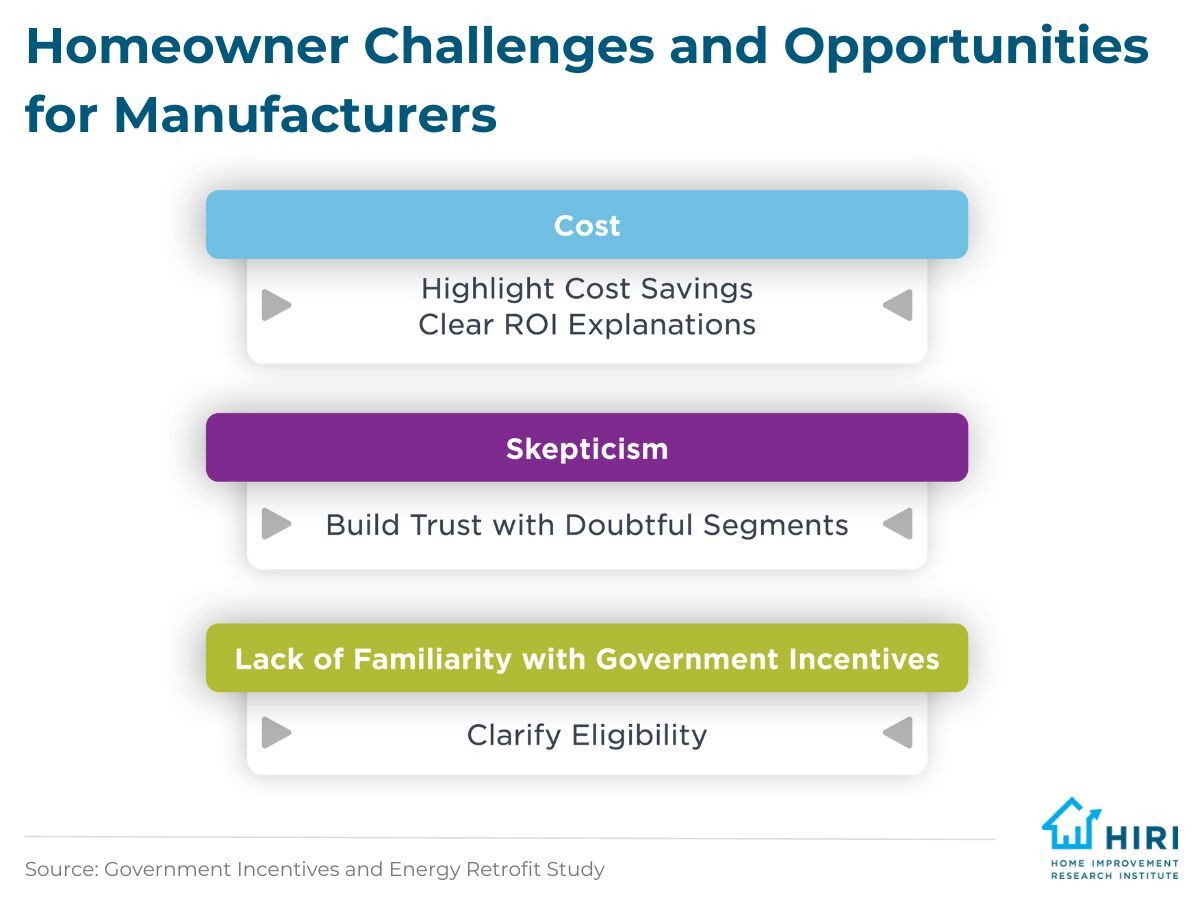
Cost is both a motivator and a barrier, particularly for lower-income and older homeowners who remain skeptical about ROI timelines. Many homeowners are unsure whether they qualify for incentives, and fewer than one in five report high familiarity with programs. Awareness declines significantly with age, income, and lower DIY skill levels, pointing to a critical gap in clarity and communication across segments.
Manufacturers can play a pivotal role by addressing these concerns directly—clarifying eligibility, simplifying messaging about expected savings, and building trust with segments that remain doubtful. Highlighting short- and long-term cost savings alongside clear ROI explanations can help reduce hesitation and build confidence.
Using Research to Tailor Messaging
HIRI’s Government Incentives and Energy Retrofit study offers a comprehensive view of adoption patterns, motivators, barriers, and demographic differences. For manufacturing brands and retailers, these insights can support messaging that emphasizes affordability and trust, aligns product recommendations with practical upgrade triggers, and better educates consumers on incentive eligibility.
Explore the full study
Dive deeper into the data to understand homeowner behavior across attitudinal and demographic segments. HIRI members have access to the full report along with additional home improvement research that can support strategy, product positioning, and customer engagement.