
Due to increased new construction and remodeling activity in recent years, there has been steady growth in the window market.
Not only is the average of the housing stock in the U.S. increasing, driving the need to upgrade older features, but replacing windows is a popular and pragmatic project for homeowners looking to improve the energy efficiency, security, livability, and aesthetic appeal of their residence. Additionally, smart technology and other developments are expanding what is possible in the market. With home improvement activity, and window replacements, in particular, expected to be resilient in the upcoming years, there should be steady demand for windows and other products used for these projects.
That leads to the question: What will homeowners and professional contractors look for when making window purchases this year? Here's what home improvement manufacturers and retailers should know about current window trends.
State of the Window Industry
The window market has been relatively steady in recent years, both globally and within the United States. Over the past few years, from 2020 to 2025, the United States market for windows, skylights, and patio doors experienced notable growth, based on data from HIRI’s U.S. Home Improvement Products Market Forecast for March 2026. The growth in the window market was primarily driven by the professional segment, with consumers offering a more modest contribution, and even experiencing slightly negative growth in 2025.
What’s the Forecast for the Window Replacement Market this Year?
In the forecast period, from 2026 to 2030, both the professional and consumer segments are projected to have more comparable growth rates. In general, the professional segment of the window market is estimated to be more than twice the value of the consumer market by 2030. For a more detailed look at specific CAGR forecasts and market sizes for the window product category, download HIRI's latest U.S. Size of Market Report.
How much does it cost to replace windows in a typical house?
According to HIRI’s 2025 Project Decision Study for mid-to-large exterior projects, the average spending on window/door replacements is about $14,000 and the median spend is $10,000. The cost to replace windows in a house can vary depending on several factors including the window material selected, the size of the window, and installation complexity. In general, a single window costs between $450 and $1,500 to replace.
What are Current Trends in Window Replacements for Homes?
When it comes to drivers of window projects and associated purchases, HIRI’s Project Decision Study explores the top-project priorities among homeowners when pursuing window replacements or upgrades and purchasing materials for these projects.
Top Factors Driving Window Replacements and Purchase Decisions
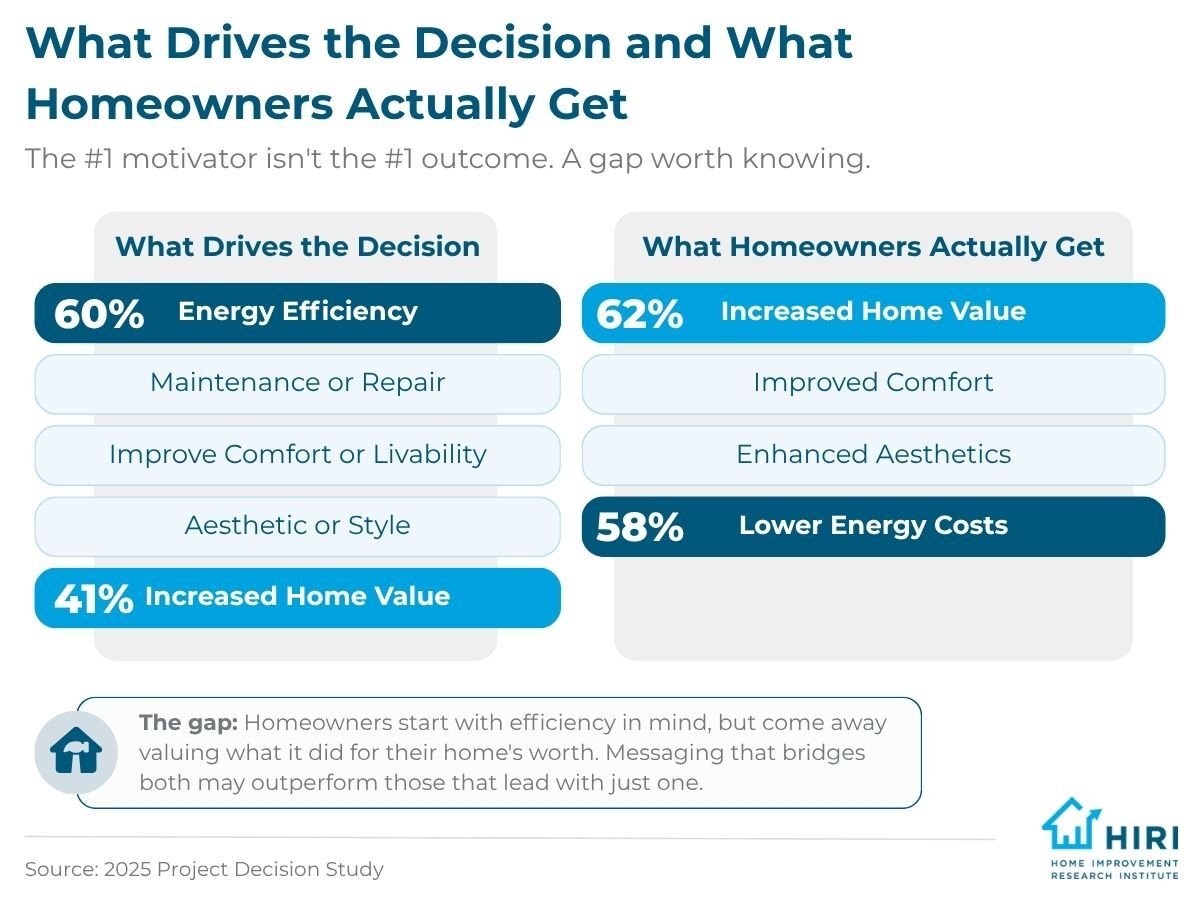
Most window replacements or upgrades are planned ahead of time, rather than done on an emergency or last-minute basis, or part of larger remodeling project. The main reasons why people replace windows in their home are for:
- Energy efficiency (60%)
- Maintenance or repair (48%)
- Improve comfort and livability (47%)
- Improve aesthetic or style (45%)
- Increase home value (41%)
Enhancing safety and security also plays a bigger role in motivating window replacements than many other home improvement projects. HIRI’s research shows that was a motivating factor for approximately 36% of projects. The benefits that homeowners have gleaned from window replacements are:
- Increased home value (62%)
- Improved comfort (60%)
- Enhanced aesthetics (58%)
- Lower energy costs (58%)
As homeowners look to maintain and upgrade their living spaces, there is a steady need for windows. Based on findings from HIRI’s 2025 Annual U.S. Homeowner Project Activity Tracker, 10% of respondents had purchased windows in the past 90 days for a project on their home. Additionally, 13% of homeowners expressed intent to purchase windows in the next 90 days.
In general, exterior projects are frequently done in isolation. However, window replacements are more often tackled alongside other exterior work. For example, HIRI’s Project Decision Study for Exterior Envelopes found that window work often overlaps with:
- Siding (55% of the time)
- Other exterior work (45% of the time)
- Foundation/waterproofing (44% of the time)

Window Replacement Project Timing
On average, the timeline for window and door activities is about 46.3 weeks. About half of that time is spent in the idea-to-decision phase. It takes another 13.9 weeks, on average, from the time a decision is made for the project to start, and then the work is typically completed in 9.1 weeks. Regardless of the reason, homeowners report that the idea to take on a window replacement project most often emerges between February and June, with May and June being the most time for making the decision to adopt the project. This shows the best time to plan sales and marketing activities is throughout the first half of the year while project planning is high, but the project is not yet initiated.
Types of Windows
Vinyl has long been the dominant replacement material chosen for regular windows because of its affordability, low maintenance, and energy efficiency. However, recent years have seen an increase in competition from fiberglass, based on data from HIRI's Product Purchase Tracking Study.
Most popular window replacement materials are as follows:
- Vinyl
- Fiberglass
- Composite
- Wood
- Clad wood
- Aluminum
Do note, however, that a majority of shoppers for storm window replacements choose aluminum, as they are durable, lightweight, and resistant to rust and corrosion.
What are the top window upgrade features people look for?
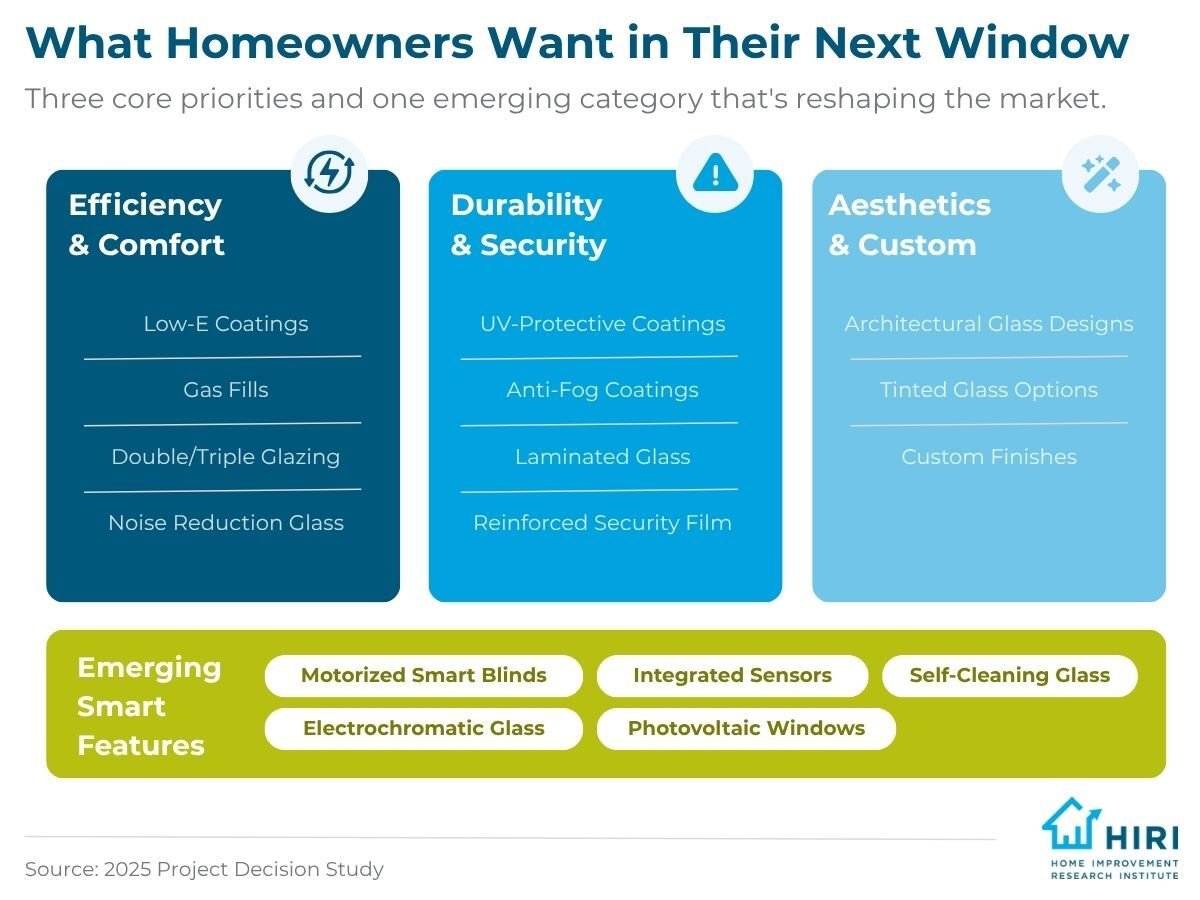
Since window replacements often have to do with improving energy efficiency (and lowering utility costs), as well as enhancing aesthetic appeal and making homes more secure, some of the top upgrade features that homeowners are looking for in 2026 include:
- Energy efficiency and insulation (low-emissivity coatings; gas fills; and double or triple glazing)
- Durability and weather resistance (UV-protective coatings and anti-fog coatings)
- Noise reduction (sealant upgrades and soundproofing glass)
- Customization options (architectural glass designs; tinted glass; and custom finishes)
- Safety and security (laminated glass; security film; and reinforced glass)
There’s also been a growing demand for smart features, as technology advances. Some popular smart and integrated features include:
- Motorized smart blinds and shades
- Electrochromic smart glass
- Integrated sensors and security
- Photovoltaic windows
- Self-cleaning glass
Window Purchase Drivers
When selecting specific window products and materials, homeowners list the following features as the most important criteria:
- Durability/being long-lasting
- Attractive appearance
- Thermal performance
- Warranty and after-sales service
- Price
- Saving on utility costs/consuming less energy
Are energy-efficient windows more popular in recent renovations?
Based on research from HIRI’s 2025 Government Incentives and Energy Retrofit Study, installing energy efficient windows or doors was one of the most popular energy retrofit completed, with about 48% of respondents claiming they had completed that type of home improvement in the past five years. Another 21% were planning to upgrade to energy efficient windows or doors in the next 12 months. As Millennials are the most likely homeowner demographic to pursue energy retrofit, and with sustainability top of mind for many consumers, HIRI expects the demand for energy-efficient windows to increase in coming years. To remain competitive in the market and meet customer needs, manufacturers should prioritize the above features in their product design and marketing communications while considering adding new low-maintenance or energy-efficient options.
Top Channels for Purchasing Windows
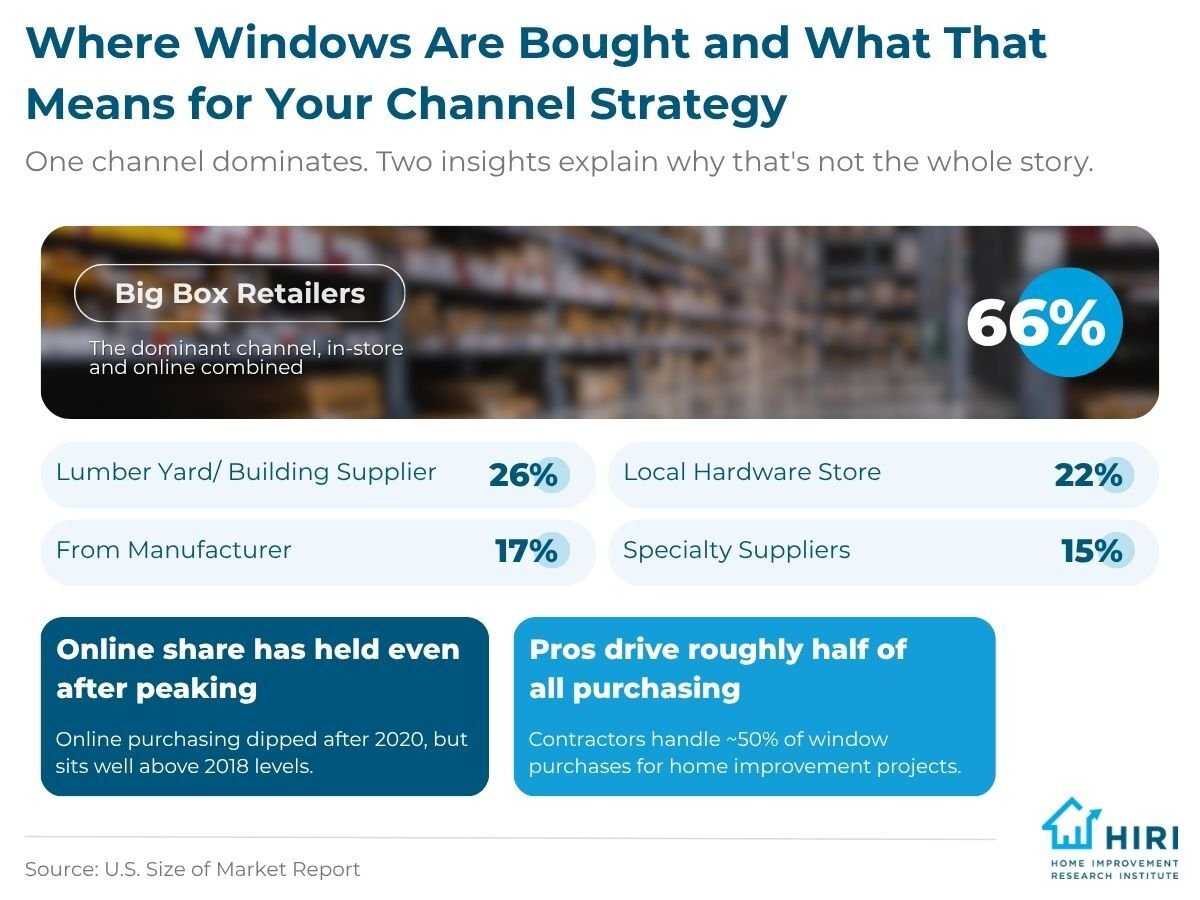
Taking a look at homeowner shopping behaviors, home centers are by far the most used supplier, with a majority of purchases happening in-store and online purchases continuing to account for about one-fourth of purchases. Online shopping for windows has decreased since 2020, but purchases through this channel remain considerably higher than in 2018.Here is a look at where and how products for exterior projects were purchased in 2025:
Retailer type:
- Big-box retailer (66%)
- Local hardware store (22%)
- Specialty supplier (17%)
- Mass retailer (15%)
- Lumber yard/building material dealer (26%)
- Direct from manufacturer (15%)
- Warehouse club (11%)
Purchase method:
- Physical store (66%)
- In-store with delivery (36%)
- Online with delivery (24%)
- Online with in-store pick-up (15%)
Historical purchases dating back to 2014 indicate a decrease in popularity of discount/department stores and an increase in shopping at hardware and specialty stores.Manufacturers may want to reconsider the mix of retailers that carry their window products in order to optimize exposure to target audiences.
Influence of Professional Installers on Window Replacements
According to HIRI’s latest Project Decision Study, more homeowners hire contractors for window replacements and upgrades for safety reasons, as well as the value of their expertise and the necessity to meet code requirements. Keep in mind, the data in this report is related to households who spent more than $5k on their projects, so these completion patterns reflect larger jobs where professional labor is more common.
Who performs a majority of window installs in projects costing $5k+?
- Contractor: 82%
- Both DIY and contractor: 11%
- DIY and/or family and friends: 7%
As for what motivates homeowners to hire contractors, rather than doing window upgrades themselves, these are the top reasons:
- Work quality (68%)
- Technical expertise (66%)
- Guaranteed workmanship (57%)
- Ease and convenience (57%)
Contractors for window replacements and upgrades are often found through referrals and word-of-mouth or through online search engines and reviews.Additionally, pros hold significant influence in window replacement materials decisions and in purchasing. Data shows they handle about half of the purchasing of doors and windows for home improvement projects. Because demand for professional contractors for repair and replacement projects remains high, evaluate how your channel partner pricing models can keep demand strong and increase your market share.
Exploring Home Improvement Research for Window Replacements
The U.S. window market will continue to see growth from 2026 to 2030, driven largely by repair and replacement needs and the desire to improve energy efficiency and reduce utility costs. Want to stay up to date on the market forces impacting the window segment and other home improvement product segments?
Join HIRI as a member for instant access to new research that everyone on your team can use to make decisions that directly impact your bottom line.

FAQs
Are homeowners doing window upgrades themselves or hiring contractors more?
A majority of homeowners hire contractors for window replacements and upgrades. This is because of safety reasons, as well as the value of professional expertise and the necessity to meet code requirements. The Home Improvement Research Institute’s 2025 Project Decision Study for mid-to-large-sized exterior projects found that 82% of window replacements used contractors, while 11% incorporated DIY work and professional assistance; about 7% of projects were done solely DIY or with the help of family/friends. Homeowners are motivated to hire contractors or professionals for window installations and replacements because of work quality; expertise; guaranteed workmanship; and ease and convenience.
Are energy-efficient windows more popular in recent renovations?
Improving energy efficiency, enhancing insulation, and reducing utility costs are significant motivators for replacing windows, which is why the use of energy efficient windows is increasingly popular in recent renovations. The Home Improvement Research Institute’s 2025 Government Incentives and Energy Retrofit Study found that installing energy efficient windows or doors was one of the most popular energy retrofit completed, with about 48% of respondents having completed that type of home improvement in the past five years. Another 21% were planning to upgrade to energy efficient windows or doors in the next 12 months.
What are the main reasons people replace windows in their homes?
The main reasons why homeowners replace windows in their homes are to increase energy efficiency (60%); for maintenance or repair (48%); to improve comfort and livability (47%); to enhance aesthetic or style (45%); and to increase home value (41%), based on findings in the Home Improvement Research Institute’s 2025 Project Decision Study for mid-to-large-sized exterior projects. On the flip side, the benefits that homeowners have said they have gleaned from window replacements are increased home value (62%); improved comfort (60%); enhanced aesthetics (58%); and lower energy costs (58%).
What are the top window upgrade features people look for?
Some of the top upgrade features that homeowners are looking for in 2026 have to do with energy efficiency and insulation; durability and weather resistance; noise reduction; customization options; and safety and security. There’s also been a growing demand for smart features, as technology advances. The Home Improvement Research Institute’s 2025 Project Decision Study for mid-to-large-sized exterior projects explores what drives homeowner behavior (from inspiration and planning through purchasing and project completion) when it comes to window replacements and other exterior projects. Additionally, HIRI’s 2025 Annual U.S. Homeowner Project Activity Tracker includes findings on how many homeowners purchased windows or plan to purchase windows in the near future for home improvement projects.